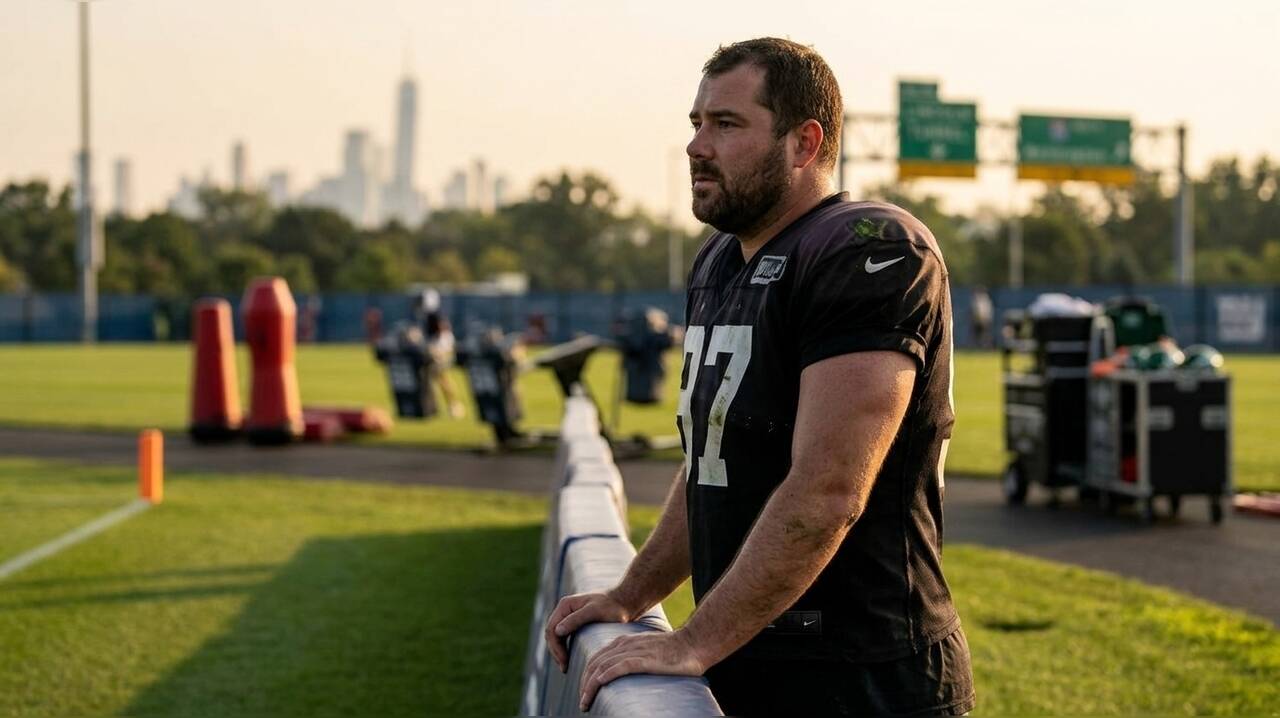
When an NFL player receives the call that they are heading to a New York team, the vision is often one of iconic skyscrapers and the fast-paced energy of Manhattan. However, for generations of
The geographical disconnect has become a rite of passage for players entering the league. While the teams carry the New York name and play their home games at
From Urban Expectations to Suburban Reality
The transition often begins with a moment of realization. Former Giants cornerback Prince Amukamara, selected in the 2011 NFL Draft, recalled his surprise when his agent informed him that he would be heading to New Jersey rather than New York City. Similarly, current Giants wide receiver Austin, who joined the team as a free agent, admitted he was unaware that the team’s operations were entirely based outside of the city, despite having played against the Jets at the stadium previously.
For some, the adjustment involves navigating local customs. Rookie Giants cornerback Hood, a Georgia native, noted his surprise at New Jersey’s unique gas-pumping laws, where attendants handle the fueling process. Meanwhile, Jets defensive tackle Harrison Phillips, who arrived via a trade from Minnesota, admitted he initially braced himself for a gritty, urban environment akin to Gotham City. Instead, he found a community of quiet neighborhoods, local diners, and friendly neighbors, which he now considers an ideal setting for his family.
Balancing the City and the Suburbs
While most players settle into the suburban lifestyle, a select few have leveraged the proximity to Manhattan to their advantage. Former stars like Tiki Barber and Brandon Marshall famously chose to live in the city during their playing days. Marshall, who played for both the Jets and the Giants, utilized a helicopter commute to bypass the notorious metropolitan traffic, allowing him to balance his professional duties in the suburbs with his media commitments in Manhattan.
Barber, who lived in the city during his tenure with the Giants, found that the reverse commute against the morning traffic made for a manageable journey. He noted that living in Manhattan provided valuable networking opportunities with executives and business leaders, which proved beneficial for his post-football career. Despite the logistical hurdles, many players eventually embrace the duality of the situation. As former Jets linebacker Bart Scott once noted, the proximity to New York allows players to feel connected to the city’s identity while enjoying the focus and space that the New Jersey facilities offer.