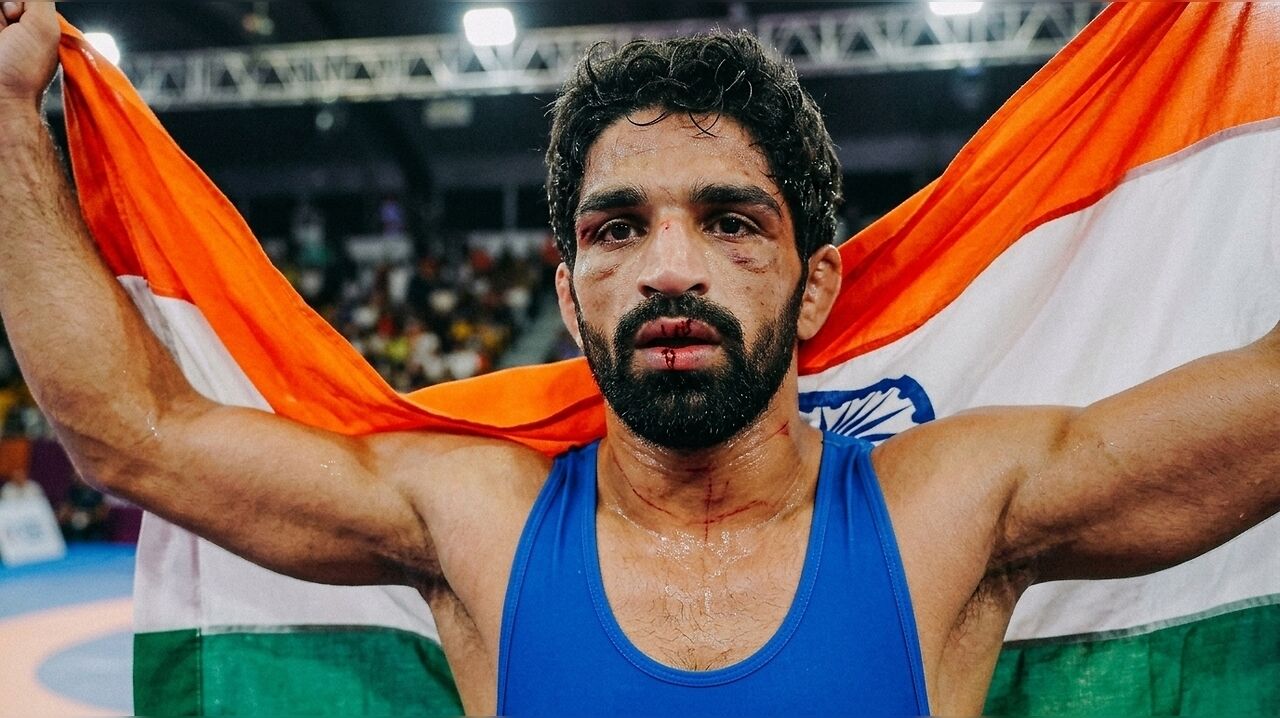
The path to the top of the podium was physically demanding, leaving the Indian wrestler with visible signs of the contest, including a bloodied lip and bruises. Despite the intensity of the bout, which saw his opponent rally from a 6-1 disadvantage to briefly take a 7-6 lead, Sehrawat remained composed. He executed two decisive takedowns in the closing stages to secure the win, marking a significant improvement from his bronze-medal finish at the previous Asian Games in Hangzhou.
Overcoming Adversity and Weight Challenges
The gold medal represents a major turnaround for Sehrawat, who had faced a turbulent period following his bronze-medal performance at the 2024 Paris Olympics. His preparation for the Nagoya event was complicated by significant weight management issues, forcing him to undergo a rigorous regimen the night before the competition. By abstaining from food and water, he successfully made the weight limit with 200 grams to spare.
This victory serves as a redemption of sorts for the wrestler, who had previously struggled with motivation and health issues, including a stomach ailment. His career trajectory had also been impacted by a disqualification and subsequent suspension by the federation after failing to make weight at the 2025 World Championships. Reflecting on his journey back to form, Sehrawat noted that he returned to his training base at Chhatrasal Stadium to refocus, even changing his phone wallpaper to an image of an Asian Games gold medal to maintain his drive.
A Milestone Achievement
With this triumph, Sehrawat has become the first Indian wrestler to secure two Asian Games medals in the men’s 57kg freestyle category. His path to the final was equally challenging, requiring him to mount comebacks against Japan’s Yamato Ogawa and Tajikistan’s Aiaal Belolyubskii in earlier rounds. Having successfully navigated these hurdles and defeated the world champion, the wrestler expressed a renewed sense of purpose and hunger for future competition.