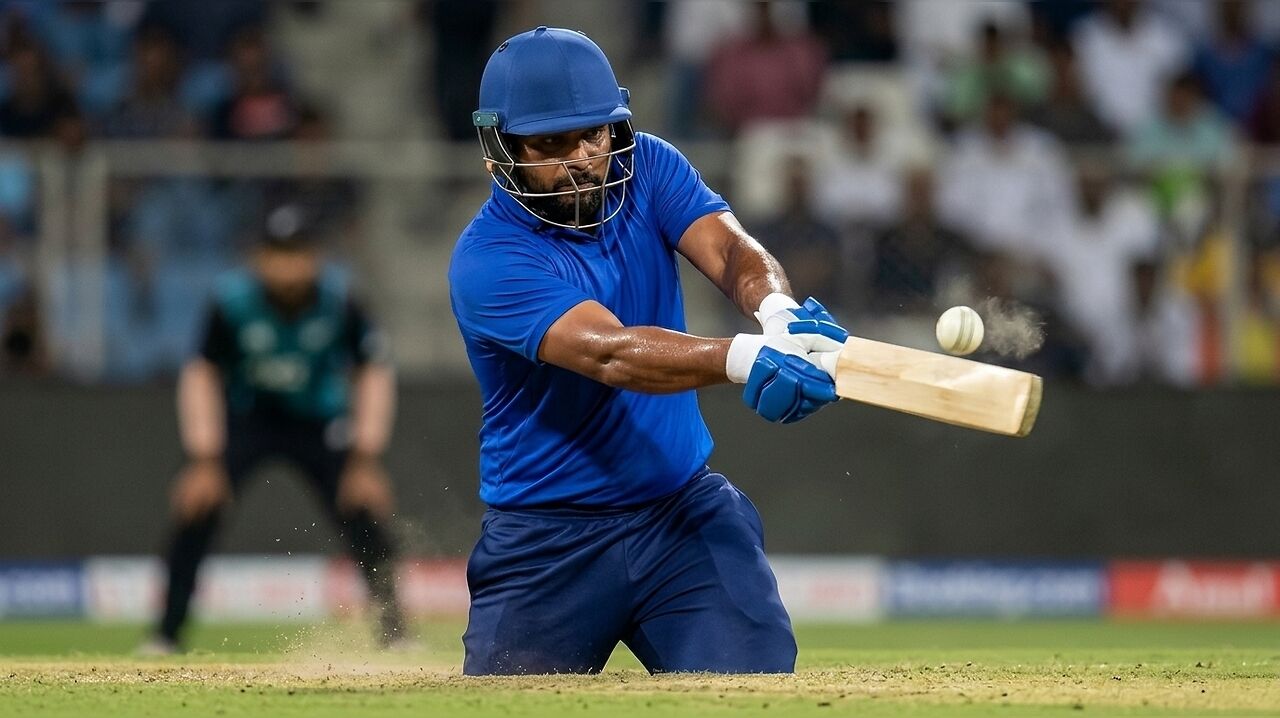
While Samson noted that he makes a conscious effort to disconnect from social media and public discourse, he acknowledged that total detachment is not always achievable. His comments came after a dominant seven-wicket victory for India, a match where his aggressive batting display—featuring 52 runs in boundaries—served as a timely reminder of his capabilities at the top of the order.
Navigating Pressure and Competition
The conversation surrounding India's opening slots has intensified recently, with young talent like 15-year-old Vaibhav Sooryavanshi emerging as a serious contender alongside Abhishek Sharma. Samson, who was omitted from the recent tour of Zimbabwe following inconsistent performances in Ireland and England, admitted that the pressure to perform can be overwhelming. He stressed that players are human, not machines, and that negative feedback can inevitably impact a player's mindset if they allow it to take root.
Reflecting on his approach to the game, Samson explained that he has learned to balance the weight of expectation with the need for clarity at the crease. He noted that if he were to dwell on the potential fallout of a failure, it would stifle his natural, aggressive style of play. Instead, he focuses on maintaining a positive outlook, choosing to prioritize the team's success over individual anxieties regarding his standing in the squad.
A Team-First Mentality
Addressing the competition for spots within the national setup, Samson dismissed the idea of internal rivalry. He emphasized that while the media and fans may view players like Sooryavanshi and Sharma as direct competitors for his position, he views them as teammates working toward a collective goal. He stated that the primary objective remains winning matches for the country, with individual aspirations taking a secondary role.
Drawing on his experience as an Indian Premier League captain, Samson expressed empathy for the team management, acknowledging the difficulty of making selection calls when multiple players are vying for limited spots. He concluded that dwelling on selection decisions is counterproductive, advocating instead for a professional mindset where players remain prepared and ready to contribute whenever called upon, rather than succumbing to negativity.