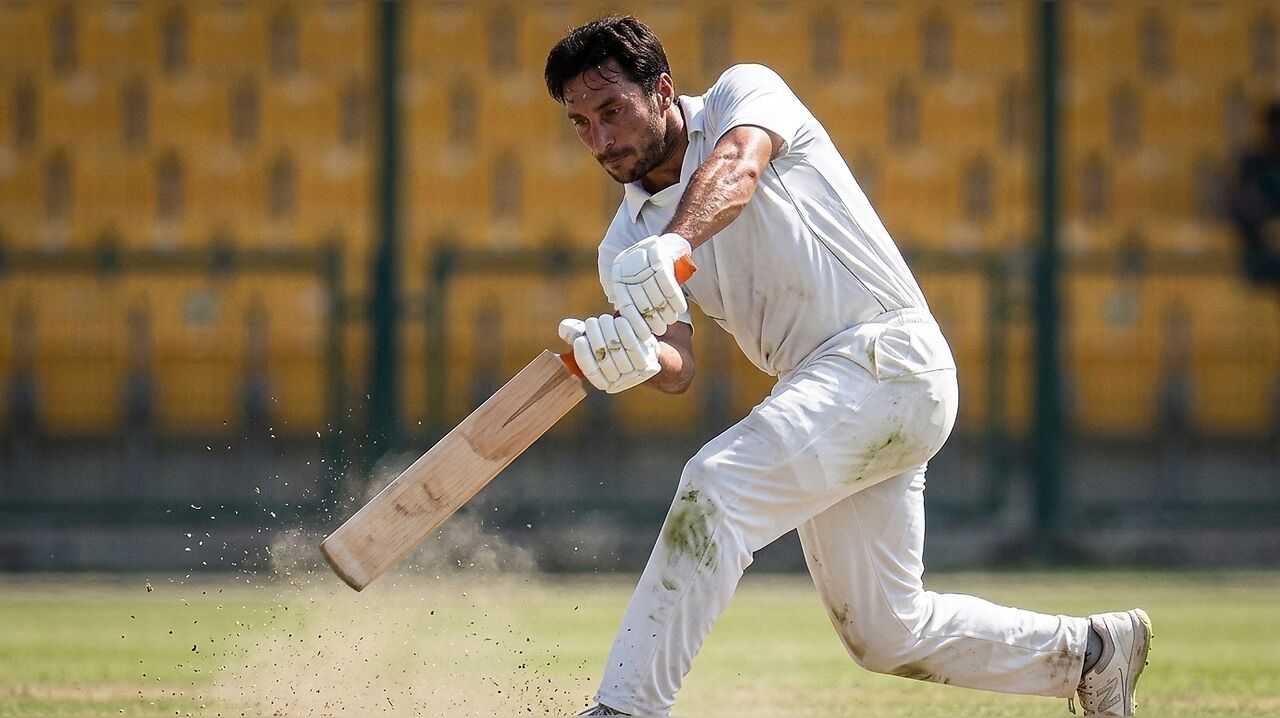
Taking over the leadership role from Hashmatullah Shahidi in July, Shah anchored the Afghan response against a disciplined Bangladesh bowling attack. His innings spanned 216 deliveries and featured 10 boundaries and two sixes. While Shah provided the backbone of the batting effort, the rest of the lineup struggled to build substantial partnerships. Abdul Malik provided some support with a patient 62 off 120 balls, and wicketkeeper-batter Ikram Alikhil added 32 from 103 deliveries before the side was eventually bowled out for 240.
Mahmud leads Bangladesh bowling charge
The day was defined by a spectacular bowling display from Bangladesh fast bowler
Beyond the hat-trick, Mahmud reached a personal milestone by claiming his 50th Test wicket, officially becoming the fastest Bangladesh fast bowler to reach the half-century mark. He capped off his performance by dismissing Yamin Ahmadzai to secure a five-wicket haul. Complementing his effort, Ebadot Hossain proved equally effective, claiming four wickets to ensure Bangladesh maintained a firm grip on the match.
Bangladesh establish first-innings advantage
Earlier in the contest, Bangladesh laid a solid foundation by posting a total of 346 in their first innings. The batting effort was led by Tanzid Hasan Tamim, who top-scored with 83, supported by valuable contributions from Shadman Islam, who made 67, and Litton Das, who added 53. Afghanistan’s bowling attack saw Mohammad Saleem Safi lead the way with four wickets, while Yamin Ahmadzai claimed three, Ismat Alam took two, and Qais Ahmad chipped in with one.
With a lead of 106 runs heading into the next phase of the match, Bangladesh remains in a commanding position despite Shah’s historic individual effort. The Test continues to highlight significant personal achievements for both sides, with the focus now shifting to whether Afghanistan can mount a recovery in the second innings.