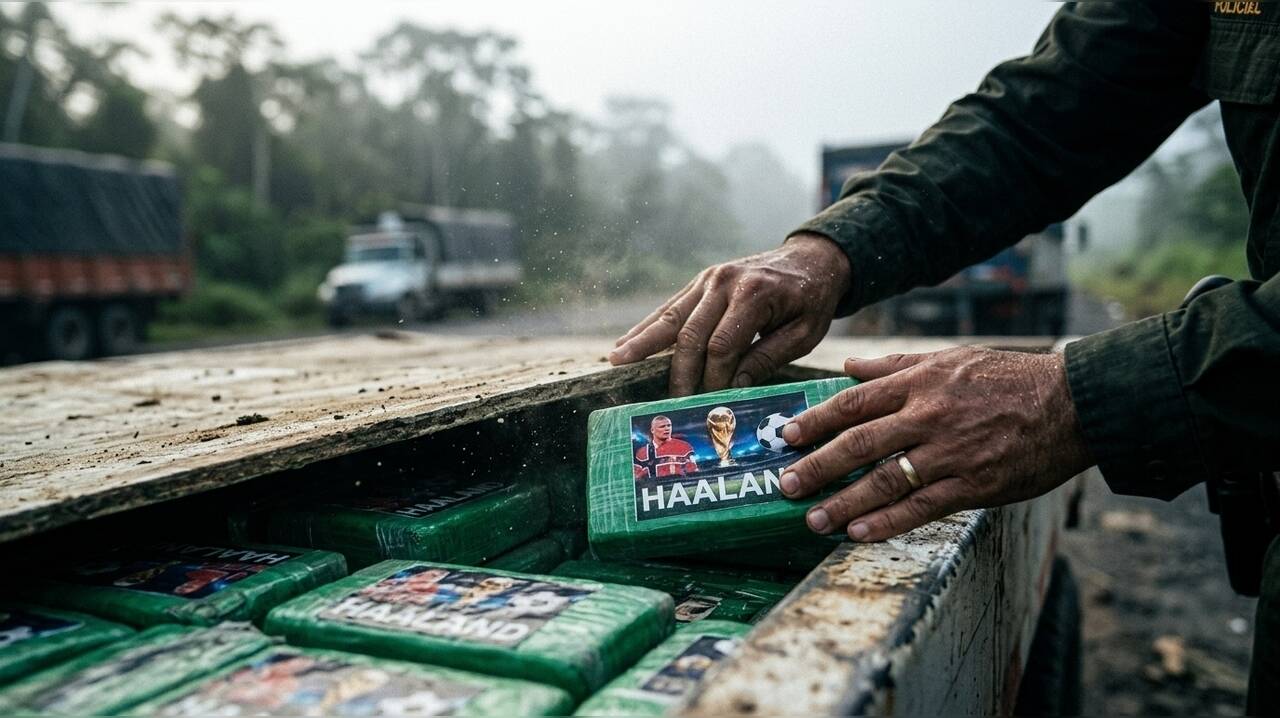
In a surprising twist, the image of Norwegian soccer sensation
Haaland, who gained international fame for his remarkable performance during the World Cup in July, where he netted seven goals in four matches, has become a cultural icon. His face has graced billboards, trading cards, and social media platforms, making him a recognizable figure worldwide. The use of celebrity images by drug traffickers is not uncommon; it serves as a branding strategy to indicate the origin of the narcotics and their intended clientele.
Police Operation Uncovers Cocaine Shipment
The operation that led to the seizure was initiated following an anonymous tip-off received early Tuesday morning. Anti-narcotics agents were patrolling the Pan-American Highway when they spotted a suspicious truck. Upon inspection, they discovered 370 packages hidden in a false compartment, with Haaland's image prominently displayed on the exterior.
Footage released by the police shows the packages tumbling out from the truck's concealed area, revealing the stickers of the popular soccer player, who is affectionately referred to by fans as "pretty princess" and "babygirl." Haaland's charismatic presence on the field, coupled with his towering physique and playful demeanor, has made him a favorite among fans and a subject of numerous viral memes.
Ecuador's Role in Drug Trafficking
This incident highlights Ecuador's critical position in the global drug trade, serving as a key logistical hub for trafficking operations. The country is a major transit point for narcotics, primarily cocaine, which is often shipped to the United States and Europe. In this particular case, a woman identified only as María R., holding Colombian identification, was also arrested during the operation in Guagua Negro, located near the border city of Tulcan.
The estimated street value of the seized cocaine is approximately $842,000 in Ecuador, with potential worth exceeding $11 million in the U.S. and over $19.6 million (17 million euros) in Europe. Local gangs, often collaborating with Colombian and Mexican cartels, control the drug routes, with 80% of the narcotics originating from Colombia and the remainder from Peru. In recent years, Ecuadorian authorities have ramped up their efforts against drug trafficking, seizing 80 tons of drugs in the first half of this year alone, and nearly 295 tons in 2024.