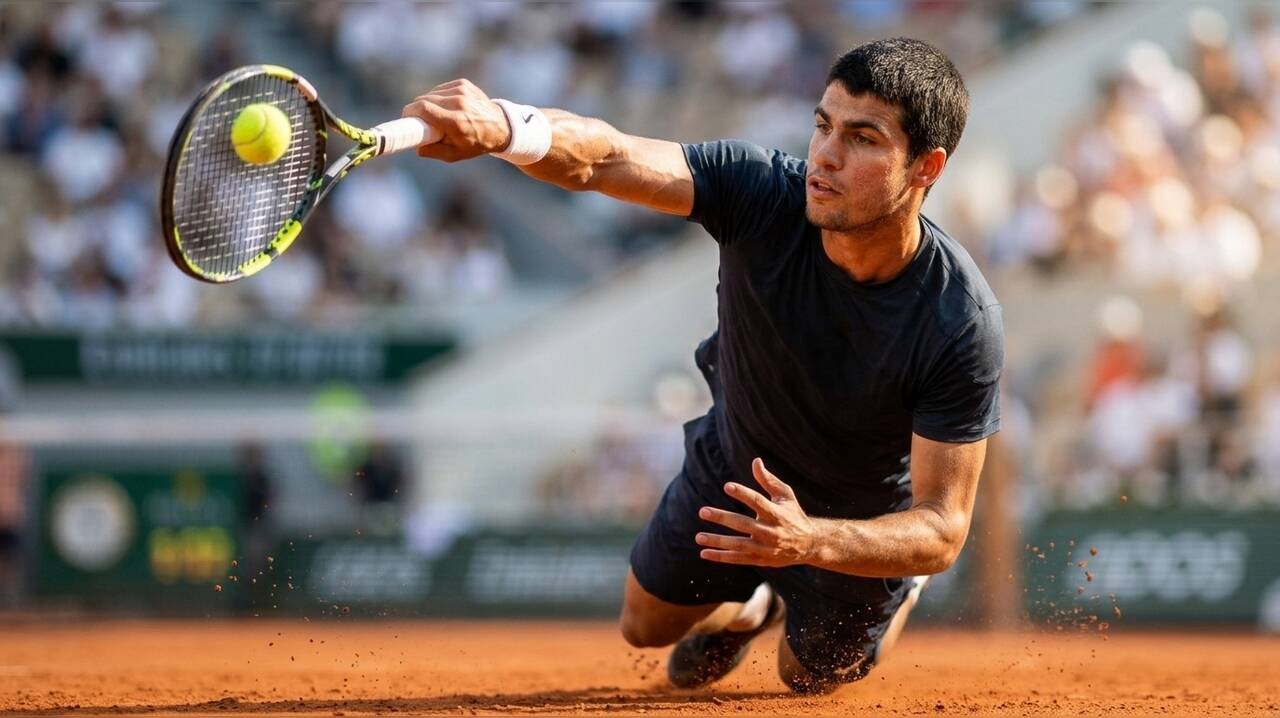
Professional tennis players who have spent months campaigning for a larger share of tournament revenues have announced an end to the public phase of their protest. The decision follows the formal establishment of a
The movement, which saw high-profile stars push for improved compensation, better health options, and pension schemes, will now transition into a private negotiation process. According to a statement released by player representatives on Monday, the council will serve as the primary vehicle for ongoing discussions regarding the financial structure of the sport's most prestigious events.
Transition to direct negotiations
The Grand Slam Player Advisory Council was introduced last month by the Australian Open, the French Open, Wimbledon, and the US Open. With this formal structure now in place, players have indicated that they will cease public demonstrations, though they have maintained that the option to resume their campaign remains open should the council fail to meet their objectives.
The campaign previously involved notable actions, including limited media appearances at the French Open and Wimbledon. Some athletes, including Aryna Sabalenka and Coco Gauff, had even raised the possibility of a boycott prior to the start of the tournament in Paris if their demands for a 22% share of tournament revenues were not addressed.
Financial impact and future outlook
While the Grand Slam tournaments have not yet agreed to a formal revenue-sharing model or met the 22% target requested by the players, there has been a notable shift in prize money distribution. Players noted that all four Grand Slams have increased their prize pools significantly over the past 18 months, exceeding the long-term growth trends observed prior to the start of the campaign.
Data provided by the players indicates that since their formal proposal was submitted on July 31, 2025, the total prize money across the 2025 and 2026 US Open, as well as the 2026 Australian Open, Wimbledon, and Roland Garros, has reached $415.6 million. Players estimate that more than $30 million of this total represents incremental gains directly attributable to the pressure applied during their campaign. The four major tournaments are managed by a mix of nonprofit governing bodies and the private All England Club, which operates Wimbledon.