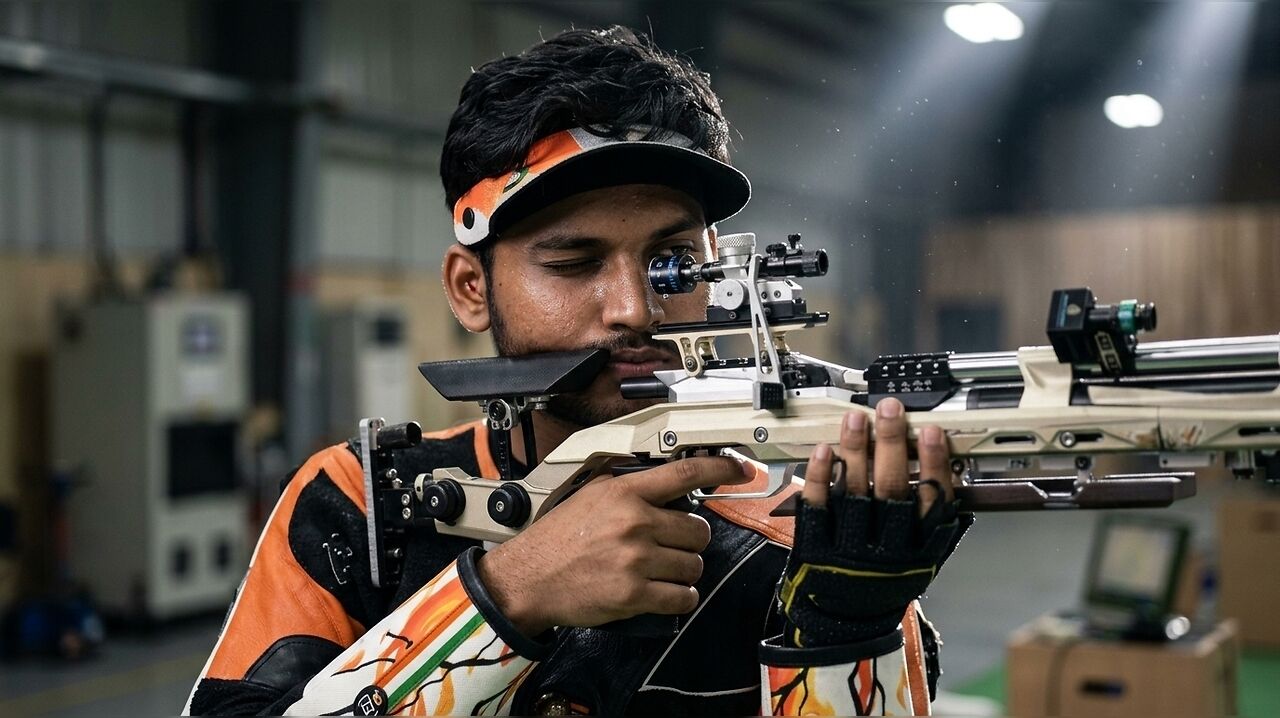
Three years ago, the shooting world viewed Rudrankksh Balasaheb Patil as the natural successor to Indian legend Abhinav Bindra. At just 19, his consistent performances and technical prowess generated significant excitement. However, the path to greatness proved non-linear. After a fourth-place finish in the
Now 22, the shooter has emerged with a more composed mindset, trading the nervous energy of his teenage years for a quiet, strategic confidence. This evolution was on display in Aichi-Nagoya, where he secured a bronze medal in the 10m air rifle. More significantly, he has expanded his competitive repertoire, now representing India in both the 10m air rifle and the 50m rifle 3-Positions, a transition he credits to the guidance of his support staff and the inspiration drawn from multi-event athletes like Michael Phelps.
A Shift in Perspective and Performance
The transition to competing in two events was initially met with skepticism, as many in the sport believed it would compromise his primary form. Patil, however, has embraced the challenge, noting that his performance has improved with each international outing. His approach to the sport has also shifted; he no longer defines his worth solely through the lens of a single result. Reflecting on his Olympic qualification disappointment, he noted that while the setback was difficult for his family and support team, he eventually found peace by focusing on the objective facts of his training and performance.
This period of reflection allowed him to rediscover his passion for shooting on his own terms. By stepping away from rigid schedules and training when he felt motivated, he rebuilt his love for the discipline. This newfound patience is complemented by a desire to see his efforts through to completion, a trait he admits was lacking in his younger years when he often left projects unfinished. Today, he draws inspiration from peers like Manu Bhaker, whose discipline serves as a constant reminder of the dedication required at the elite level.
Strategic Growth and Future Ambitions
Patil’s journey has also been marked by a shift in how he manages the physical and mental toll of elite competition. Previously, his obsession with winning led to burnout and health issues, including an auto-immune condition triggered by stress. He is now learning to be more strategic, acknowledging that fatigue is a natural part of the Olympic cycle. His recent bronze medal performance, while successful, provided a learning moment; a single 9.7 shot cost him a higher finish, serving as a reminder to maintain composure until the final moment.
Supported by the system—including training stints in Serbia and guidance from national coaches—Patil is steadily climbing the ranks in the 50m 3P event. While he maintains a healthy respect for his peers, such as Aishwary Pratap Singh Tomar, he remains focused on his own development. With a career that already includes a World Championship title and a World Record, he is now looking toward the future with a clear set of goals. As he continues to refine his craft, he remains driven by the hope that his persistent efforts will eventually lead to the ultimate recognition in his sport.