The upcoming FIH men’s and women’s World Cups, set to take place in the Netherlands and Belgium, will introduce a revised tournament structure that poses new challenges for participating teams. This year, the competition will feature 16 teams divided into four groups of four, eliminating the quarterfinal stage that was briefly included in the previous editions held in 2018 and 2022/2023.
Group Dynamics and Progression
The Indian men's team finds itself in Pool D, competing against England, Pakistan, and Wales. Meanwhile, the women's team will also face tough competition in Pool D, where they will go up against China, England, and South Africa. The format stipulates that the top two teams from each group will advance to the next stage, which will be organized into two groups of four. The leading two teams from these groups will then secure their spots in the semifinals.
In a notable twist, if the Indian men's team or any of their Pool D rivals—England, Pakistan, or Wales—progress to the second round, they will be matched with the top two teams from Pool A. This means that the results from the initial pool stage will carry significant weight, as they will influence the standings in the subsequent round.
Coaches' Perspectives on the New Format
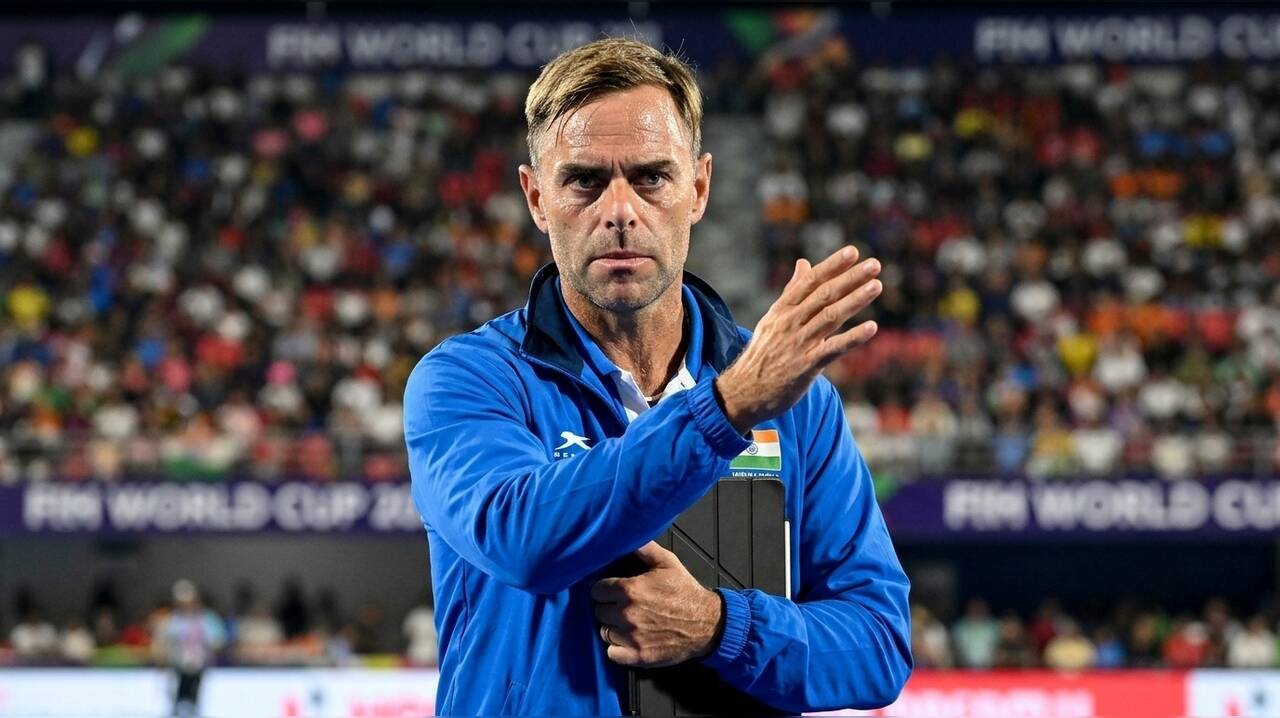
On the women's side, Sjoerd Marijne, the head coach, expressed his concerns regarding the new structure. He believes that the absence of quarterfinals diminishes the excitement typically associated with knockout games. “It’s an interesting schedule, but my preference is to have quarterfinals in a tournament format. The higher-ranked teams will prefer this, but I think quarterfinals are among the most exciting matches,” Marijne remarked, reflecting on the competitive spirit that such matches can bring to the tournament.