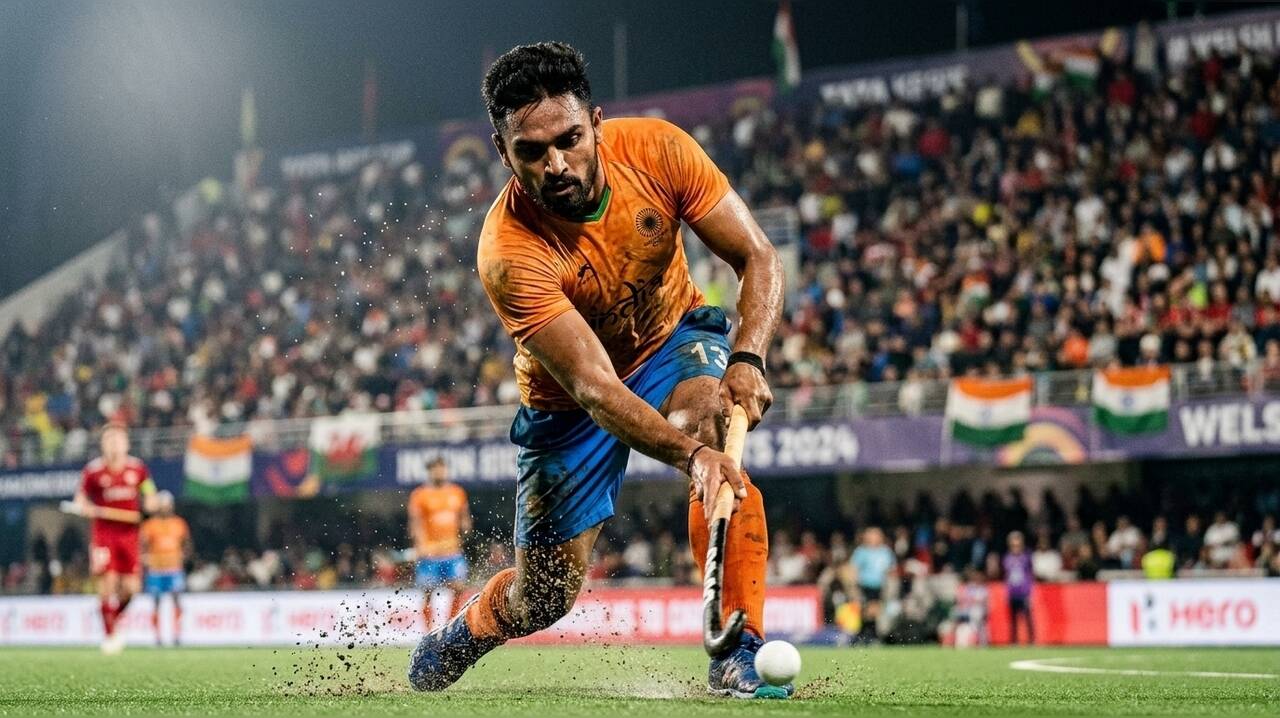
As India marks its 80th Independence Day, the men's hockey team is set to kick off its World Cup journey against Wales in Amstelveen, with hopes of breaking a 51-year medal drought. The emotional ties that Indians have with hockey make this wait particularly poignant for the eight-time Olympic champions, who last secured a medal in 1975 when they triumphed in Kuala Lumpur, a time before the advent of synthetic turf.
Confidence in the current squad, led by captain
Challenges Ahead for the Men's Team
The squad has faced its share of challenges, including controversies surrounding veteran player Manpreet Singh and a contentious decision to change their traditional blue jersey to saffron. Nevertheless, the team has regrouped, especially after the retirement of legendary goalkeeper P.R. Sreejesh. Following their match against Wales, the eighth-ranked team will encounter tough opponents, including England and their long-standing rivals, Pakistan. With a mix of seasoned Olympic medallists and promising newcomers, the team aims to improve upon their sixth and ninth-place finishes in the previous two World Cups, setting their sights on a strong performance before heading to the Asian Games next month, where a gold medal would secure a spot in the 2028 Olympics.
Women's Team Faces New Challenges
Meanwhile, the women's team, led by Salima Tete, is undergoing a transformation under Dutch coach Sjoerd Marijne, following a tumultuous period marked by the departure of his predecessor and an alleged sexual harassment case involving a former Hockey India official. Marijne, who previously guided the team to its best-ever fourth-place finish in Tokyo, has successfully led them to World Cup qualification and a victory in the Nations Cup. However, with a roster that includes five players with over 200 caps and 11 debutants, the team, currently ranked ninth, faces a tough road ahead as they aim to surpass their ninth-place finish from 2022. Their first match is against Olympic silver medallists China on August 16, followed by games against South Africa and higher-ranked England.
This World Cup marks a historic moment as it is co-hosted by Belgium and the Netherlands, featuring a new format with 32 teams competing across both genders. For both Indian teams, the focus will be on building cohesive units as they prepare for the upcoming challenges, with an eye on the Los Angeles 2028 Olympics.