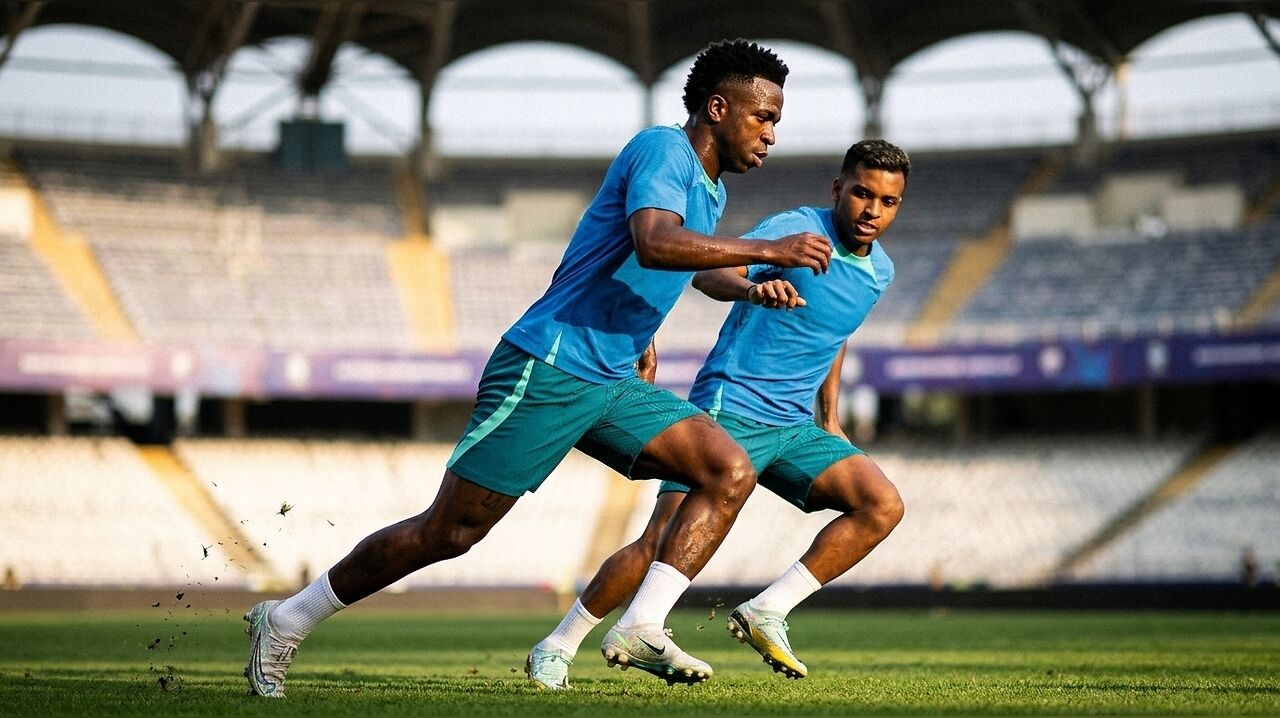
The iconic
More than 300 members of the media, including international correspondents and a contingent of Brazilian journalists, descended upon the stadium to witness the five-time world champions in action. The squad, led by head coach Carlo Ancelotti, appeared relaxed as they completed a one-hour session, focusing on light drills and tactical warm-ups shortly after arriving in the city via a private jet from Brisbane.
Building Momentum Under Ancelotti
For the Brazilian camp, the visit to India serves as a vital step in their post-World Cup evolution. Following their round-of-16 exit against Norway, the team is currently undergoing a tactical transition under Ancelotti’s guidance. The manager has been tasked with restructuring the defensive line while maintaining the side's renowned attacking potency, with an eye toward the 2028 Copa America.
The team’s recent form suggests progress is being made. During their tour of Australia, the Selecao secured a 1-1 draw in their opening fixture before delivering a clinical 4-2 victory in the second match. Saturday’s encounter against India provides another platform for the coaching staff to evaluate squad depth and refine team chemistry before the competitive calendar intensifies.
Logistical Challenges Overshadow Preparations
While the mood on the pitch remained focused and professional, the event was marred by significant administrative friction off the field. A chaotic scene unfolded in the press conference area as hundreds of journalists were left without their promised accreditation cards. The All India Football Federation (AIFF) had initially indicated that credentials would be distributed immediately following the training session.
However, the cards failed to arrive, leading to heated exchanges between local media and the organizing committee. With less than 24 hours remaining until the 7:30 p.m. kick-off, the lack of clarity regarding the distribution process left many reporters—some of whom had traveled from across the country and abroad—in a state of uncertainty. An internal source attributed the breakdown to a combination of late communication regarding seating capacities and a high volume of applications, ultimately labeling the situation as a case of overall mismanagement.