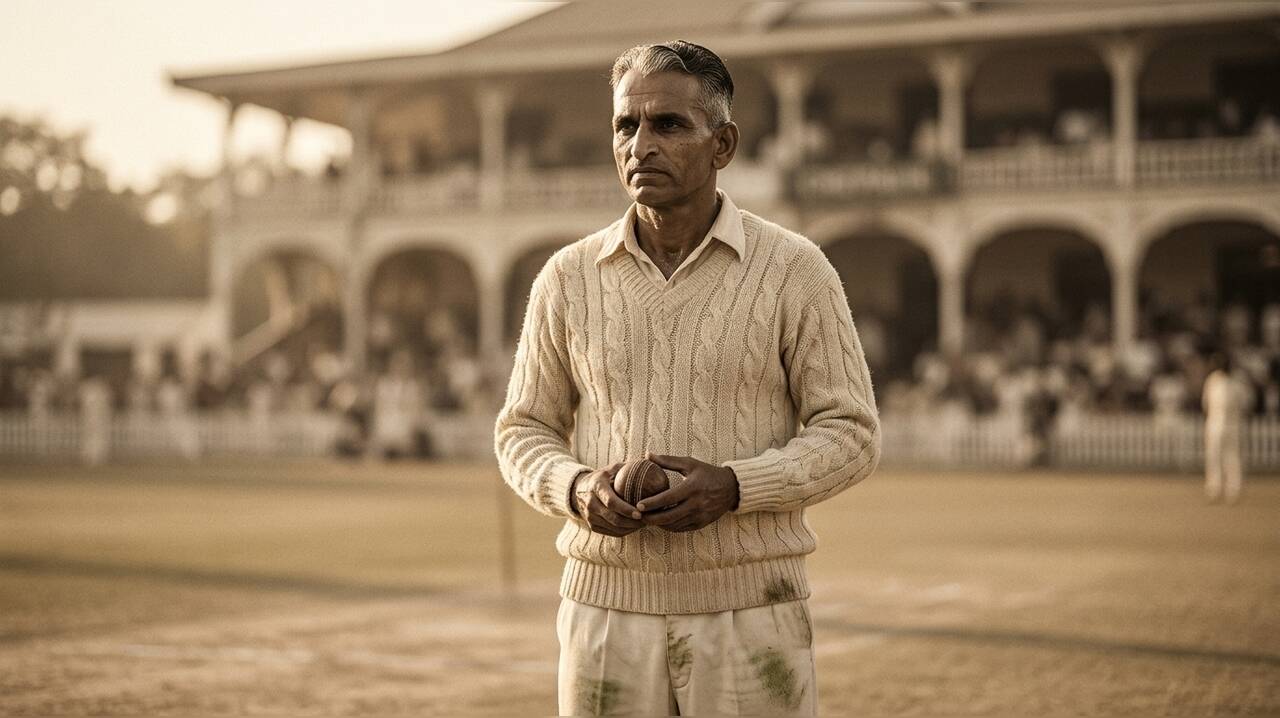
In the annals of Indian sporting history, few narratives possess the poignant irony of
Driven by his deep-seated passion for cricket, Gopalan opted for the tour. The decision would eventually become one of Indian sport’s most debated “what ifs.” While the Indian hockey team secured a historic gold medal in Berlin, crushing Germany 8-1 in the final, Gopalan’s cricket tour proved far less fruitful. Despite his inclusion in the squad, he failed to earn a single Test cap during the trip, finding himself sidelined behind established bowlers like Mohammad Nissar and Amar Singh.
A Legacy Beyond the Single Test
Gopalan’s international cricket career was limited to a solitary Test appearance against England in Calcutta during the 1933-34 season, where he contributed 18 runs and claimed one wicket. However, this modest international statistic belies his significant impact on the domestic game. A fast-medium bowler known for his ability to move the ball both ways, he was a dominant force in Madras cricket for over two decades.
His first-class record stands as a testament to his genuine ability, featuring 194 wickets and 2,916 runs across 78 matches. Beyond the numbers, he cemented his place in the sport’s folklore in 1934 when he was granted the honour of bowling the very first delivery in the history of the
Honouring a Dual-Sport Pioneer
Gopalan’s influence extended well past his playing days. He served as a national selector in the 1950s and remained a pillar of the Madras cricketing community. His contributions were formally recognised through the MJ Gopalan Trophy, an annual contest between Madras and Ceylon, and by the naming of a gate in his honour at the iconic MA Chidambaram Stadium in Chennai.
By the time of his passing in December 2003, Gopalan was celebrated as the oldest surviving Test cricketer in India. While his decision to bypass the 1936 Olympics meant he missed the chance to stand on the podium with Dhyan Chand, his legacy remains secure. He chose the sport he loved, and in doing so, he helped shape the early trajectory of Indian domestic cricket, leaving behind a career that remains a fascinating study in sporting priorities and the unpredictability of history.