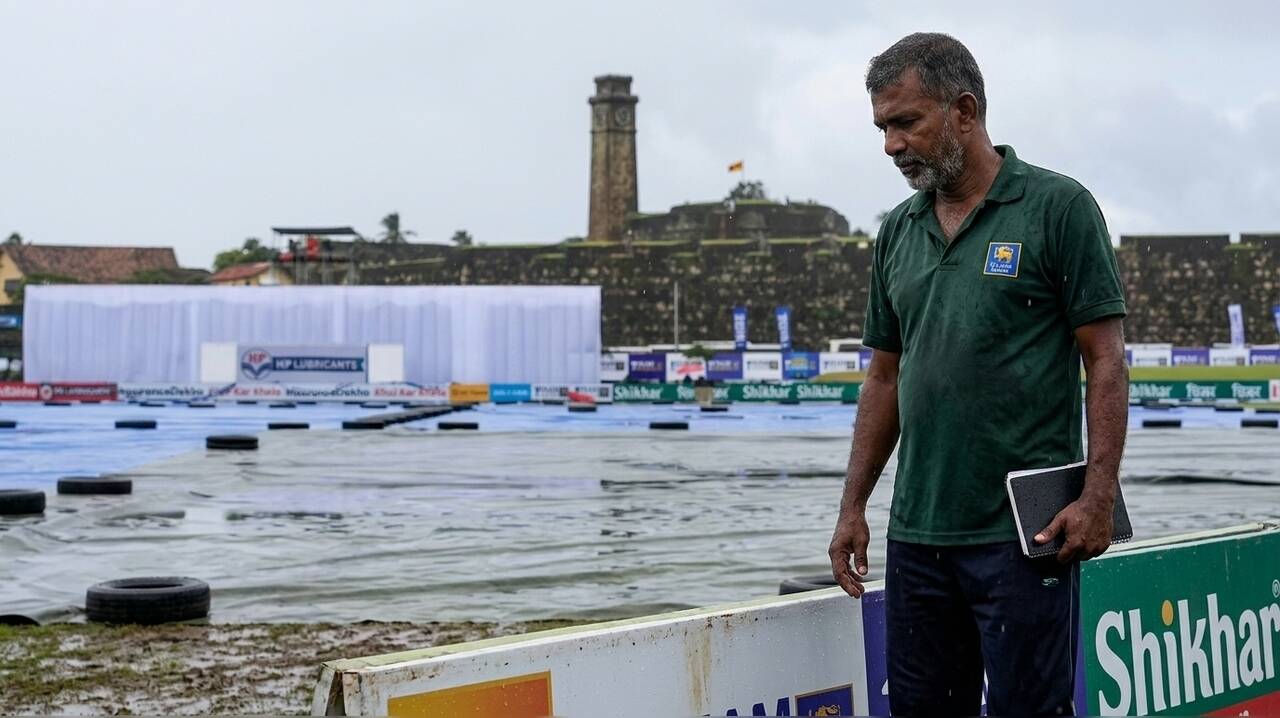
As the final whistle blew at the Galle International Cricket Stadium, the atmosphere shifted from competitive excitement to a flurry of post-match activity. While players from India and Sri Lanka exchanged handshakes and departed the field, the real work was just beginning for Manjula and his dedicated team of 130 groundstaff. A sudden downpour followed the match, but unlike the previous week, there was no frantic rush to protect the pitch. Manjula, overseeing operations from atop an advertising board, watched as the covers were methodically folded and stored after a week filled with cricketing action.
Since the arrival of both teams in Galle for the series opener, rain had been a frequent visitor, keeping Manjula and his crew on high alert. Of the 130 staff members, only 16 are permanent employees of Sri Lanka Cricket (SLC), while 10 additional workers came from Hambantota specifically for the international fixture. The remainder are hired on a daily basis, earning between 2,500 LKR and 4,000 LKR for their efforts during the matches and practice sessions. “We have 16 permanent employees and 10 come from Hambantota whenever an international match comes to Galle. For the rest, we hire daily workers for the duration of the match and practice sessions,” Manjula explained.
Expert Coordination Under Pressure
Despite the unpredictable weather, the groundstaff executed their responsibilities with remarkable precision. Their average time to cover the entire ground is less than five minutes, a feat achieved through keen observation and quick reactions. “We keep our eyes on the ocean. When clouds start building up, we know it’s coming,” Manjula noted, emphasizing the importance of readiness. The team follows a strict protocol, covering the pitch, square, and run-up in a specific order to ensure efficiency.
The sight of groundstaff sprinting from all directions to drag heavy covers is a testament to their teamwork. Each cover, weighing over 650 kg for a 100x100 piece, poses a significant challenge, especially in windy conditions. “These are not light,” Manjula remarked with a chuckle, highlighting the physical demands of their work. To combat strong winds, they strategically place over 300 rubber tyres on the covers to secure them in place, ensuring the ground remains protected during sudden showers.
Seamless Operations and Quick Recovery
Once the rain subsides, the removal of the covers is executed with equal care. Instead of hastily pulling them off, the team rolls them out in a manner that directs water away from the field. Additionally, the stadium is equipped with four functional Super Soppers that spring into action to prepare the outfield for play as soon as the rain stops. Over the past week, the coordination between the groundstaff and these machines has been flawless, allowing for minimal disruption to the game.
As the week comes to a close, many of the groundstaff will return to Hambantota, but their tireless efforts throughout the series deserve recognition. Their commitment ensured that crucial playing time was preserved, showcasing the unsung heroes behind the scenes of international cricket.