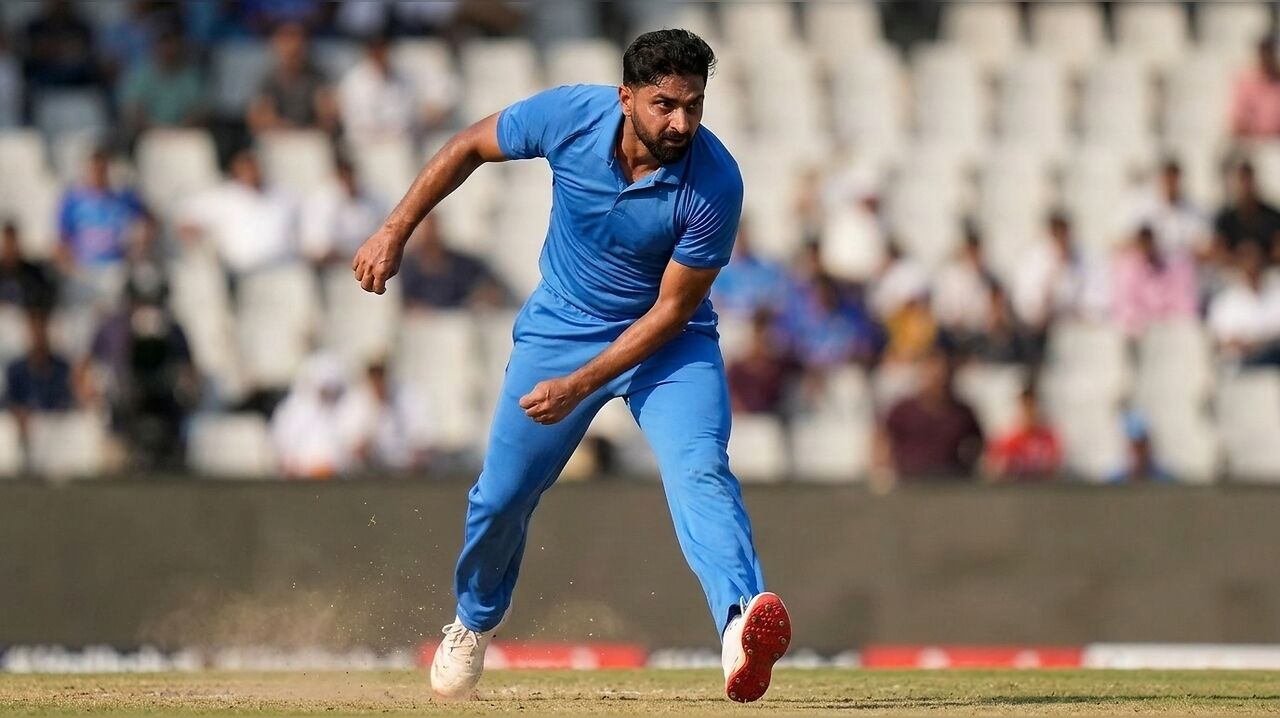
The performance marked an unwanted entry in the record books for the debutant. Nabi’s total of 84 runs is the highest ever conceded by an Indian bowler in their maiden ODI appearance, eclipsing the previous mark of 83 runs set by Karsan Ghavri against England in 1975. Furthermore, his economy rate of 9.51 stands as the worst by an Indian bowler on debut among those who have delivered at least 30 balls.
West Indies dominate with historic batting display
The visitors took full advantage of a flat surface and an inexperienced Indian pace attack to post 405/7, the first time the West Indies have surpassed the 400-run mark in
Campbell set the aggressive tone early, racing to a 65-ball century and finishing with 101 off 68 deliveries. Captain Shai Hope provided stability and acceleration, scoring 104 off 94 balls, while Amir Jangoo contributed a blistering 114 off just 83 deliveries. The total of 405/7 comfortably surpassed the West Indies' previous ODI record of 389, which was set against England in 2019.
India’s bowling struggles and injury concerns
With senior pacers Jasprit Bumrah and Mohammed Siraj unavailable, India’s experimental bowling unit faced significant pressure. While Gurnoor Brar claimed 2/96 and Prasidh Krishna took 1/45, the attack struggled to stem the flow of runs. The situation was further complicated by an injury to batting all-rounder Naman Dhir, who was forced to leave the field in the 36th over after twisting his ankle.
The spin duo of Kuldeep Yadav and Ravindra Jadeja provided the only relative control for the hosts, taking 2/65 and 2/75 respectively. Notably, Kuldeep Yadav’s performance saw him reach the milestone of 200 ODI wickets. As India continues to test its depth ahead of the 2027 World Cup in South Africa, the match served as a stark reminder of the challenges facing the team's developing pace battery.