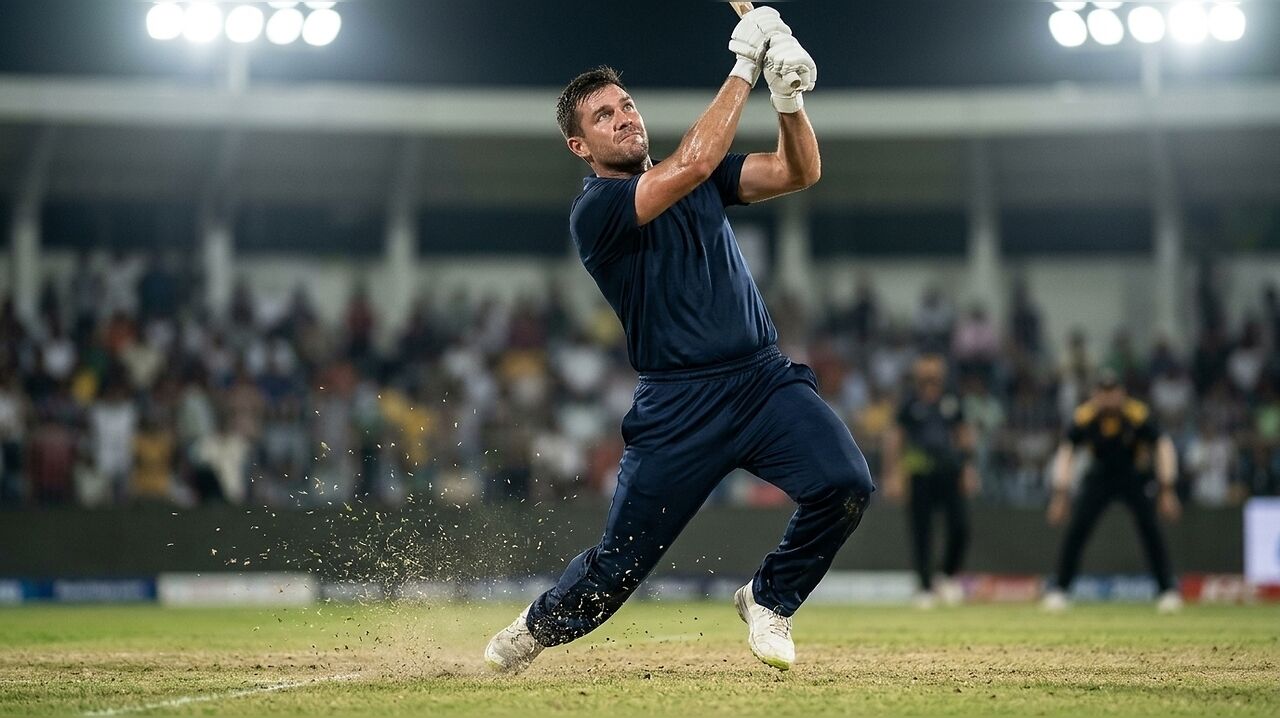
The 24-year-old’s performance was historic in its own right, as he moved to 11 career T20 centuries, surpassing Virat Kohli’s tally of 10 to become India's leading centurion in the format. Globally, Sharma now sits third on the all-time list for men's
A Record-Breaking Powerplay Assault
India’s chase was defined by a tactical shift at the top of the order, with Vaibhav Sooryavanshi joining Sharma to open the batting. The pair dismantled the New Zealand bowling attack immediately, accumulating 118 runs during the Powerplay. This total established a new record for the highest Powerplay score by a Full Member nation in men's T20 internationals.
The opening partnership produced 133 runs before Sooryavanshi was dismissed by Matthew Fisher, who claimed his maiden T20I wicket. Despite the loss of his partner, Sharma continued his relentless assault until he was eventually caught by Glenn Phillips off the bowling of Kyle Jamieson. New Zealand’s decision to delay the introduction of captain Mitchell Santner’s spin proved costly, as the game was effectively decided by the time the bowlers found any rhythm.
New Zealand’s Competitive Total
Earlier in the day, India captain Shreyas Iyer won the toss and elected to field. New Zealand recovered from the early loss of Tim Seifert through a spirited partnership between Finn Allen and Daryl Mitchell. While Allen fell in the 40s, Mitchell anchored the innings with an unbeaten 89, supported by a useful contribution from Bevon Jacobs.
India’s bowling attack faced early pressure, with Bhuvneshwar Kumar struggling to contain the hosts. However, the visitors tightened their lines in the final overs. Disciplined death bowling from Arshdeep Singh, Nitish Kumar Reddy, and a resilient Prince Yadav prevented New Zealand from surpassing the 200-run mark, restricting them to a total of 199. With the series already decided, the two teams are set to play the remaining two fixtures of the five-match series.