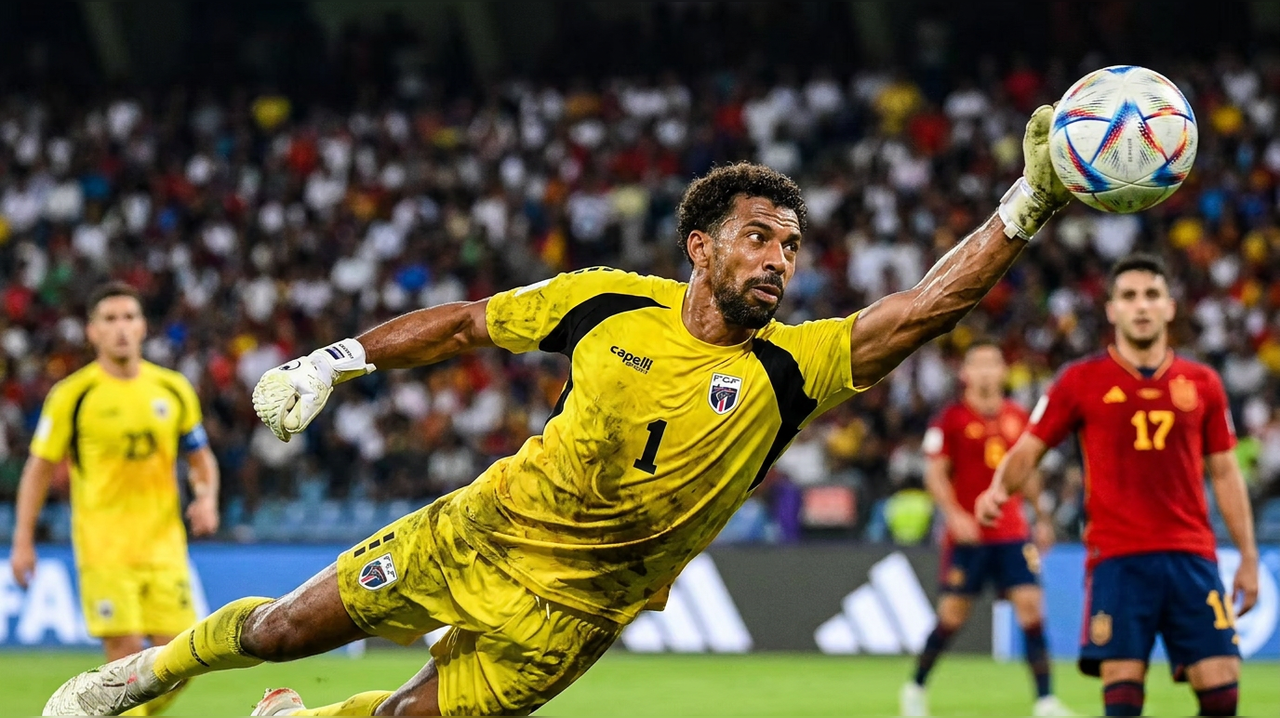
NEW DELHI: The inaugural matches of the group stage at the 2026
In a historic debut for Cabo Verde, Vozinha made seven crucial saves, leading to a surprising 0-0 draw against the Spanish team. This result not only marked a significant achievement for Cabo Verde but also earned Vozinha the Man of the Match accolade. Currently playing for GD Chaves in Portugal's second division, Vozinha's heroics have catapulted him into the spotlight, making him an overnight sensation in the football world.
Market Value Discrepancies Spark Debate
As clips of Vozinha's stellar performance circulated widely, they ignited a heated discussion among
The average market value of the Indian squad is around Rs 1.46 crore, with the lowest valued players, such as Rahul Bheke and Pramveer, still commanding Rs 80 lakh. Even the Indian goalkeeping trio—Gurpreet Singh Sandhu, Albino Gomes, and Hrithik Tiwari—have market values ranging from Rs 1.4 crore to Rs 1.8 crore. This disparity has led to a clear argument among fans that Indian players are overvalued compared to a proven World Cup performer like Vozinha.
Understanding Market Valuation
The methodology behind Transfermarkt's player valuations sheds light on this discrepancy. Rather than relying solely on performance metrics, the platform utilizes a community-based approach, where members assess player values based on market demand and club financial conditions. This means that a player's valuation reflects local market dynamics rather than a direct measure of international quality.
Former Indian international Robin Singh emphasized that the responsibility for these inflated valuations lies with the clubs, not the players. He noted that the demand for players and the financial willingness of clubs to invest play crucial roles in determining market value. In contrast, former midfielder Mehtab Hossain pointed out that while age and career stage influence valuations, there are indeed inflated prices in the Indian market, driven by structural issues and aggressive agent tactics. Hossain highlighted that the competitive nature of clubs often leads to inflated player prices, as teams prioritize immediate success over long-term development.