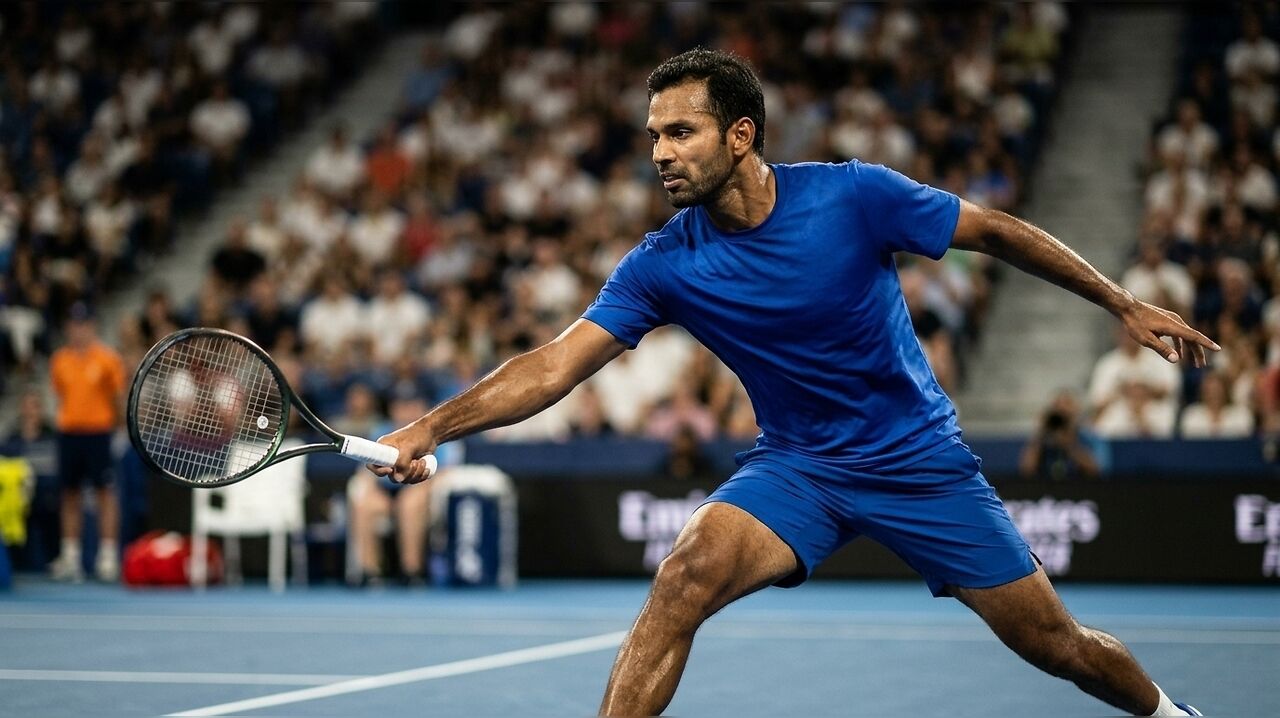
India’s tennis campaign at the 2026 Asian Games concluded on a somber note on Thursday, October 1, as the national contingent failed to secure a medal for the first time since 1986. The exit of top-ranked singles player Sumit Nagal in the quarterfinals officially brought an end to India’s participation in the tournament, leaving the squad empty-handed despite high expectations heading into the event.
Nagal, who carried the nation's hopes following the earlier elimination of several doubles pairs, fought hard but ultimately succumbed to China’s Yibing Wu in a straight-sets defeat. The match, which lasted one hour and 38 minutes, ended 4-6, 4-6, effectively closing the door on India’s prospects of maintaining its long-standing tradition of podium finishes at the continental games.
A Shift in Fortunes for Indian Tennis
The result marks a significant decline for a nation that had consistently secured medals in every edition of the Asian Games since 1990. Expectations were high for the 2026 squad, with officials anticipating at least three medals. This performance follows a challenging period for Indian tennis, including a recent defeat to South Korea in the Davis Cup Qualifiers, further highlighting the current struggles within the national setup.
The doubles categories, often a source of success for India, also failed to yield results. Despite the presence of experienced players like Yuki Bhambri and N. Sriram Balaji, the teams were unable to progress past the quarterfinal stage. Bhambri and his partner, as well as the pairing of Balaji and Anirudh Chandrasekar, were eliminated before reaching the medal rounds. Additionally, the mixed doubles campaign saw Bhambri and Rutuja Bhosale fall to a formidable Chinese Taipei team featuring Grand Slam champion Hsieh Su-wei.
Looking Toward the Future
With Nagal now 29, concerns regarding the aging core of the team have come to the forefront. Coach Ashutosh Singh acknowledged the high level of competition but admitted that the results were disappointing given the team's experience. He noted that while Nagal performed well in earlier rounds, he was unable to capitalize on critical opportunities during his final match.
Addressing the need for a strategic overhaul, Singh emphasized that the development of the next generation of players must become a priority. He specifically pointed to the need for younger talents like Dhakshineswar Suresh to improve their physical endurance for demanding tournament schedules. Meanwhile, AITA interim Secretary General Sunder Iyer expressed a commitment to reviewing the federation's support systems for both junior and professional players.
Despite the lack of medals, the coaching staff praised the professionalism and unity displayed by the squad throughout the tournament. As the team looks ahead to the 2030 Asian Games in Doha, the focus is expected to shift toward a more robust support structure and the cultivation of emerging talent to restore India’s competitive standing in the sport.