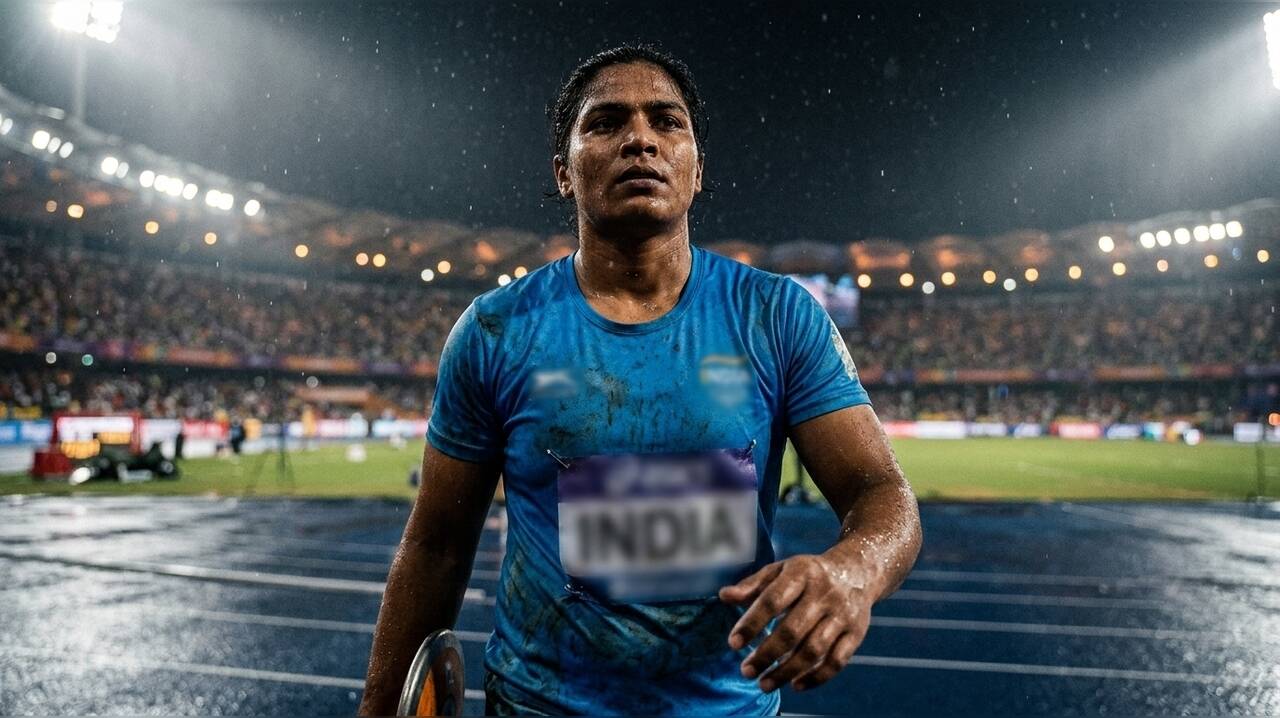
India secured a commendable fourth place at the 2026 Commonwealth Games held in Glasgow, concluding on August 2, with a total of 39 medals comprising 13 gold, 17 silver, and nine bronze. This achievement is particularly notable given the absence of several key sports that have traditionally contributed significantly to India's
Historical Context of India's Commonwealth Performance
India's journey in the Commonwealth Games began in 1934, when wrestler Rashid Anwar clinched the country's first medal, a bronze in the 74kg freestyle category. Over the years, India has faced various challenges, including missing several editions of the Games and experiencing periods of limited success. The first gold medals were won in 1958 by Milkha Singh in the 440-yard race and wrestler Lila Ram in the 100kg category. The medal count gradually increased, with significant milestones reached in subsequent decades, including a record 101 medals at the Delhi 2010 Games.
Despite the absence of sports like shooting, wrestling, and badminton in Glasgow, which have historically been strong contributors to India's medal count, the nation still managed to secure a respectable number of medals. The 2026 Games featured a reduced program of 10 sports, including athletics, swimming, and judo, among others. This shift in the competitive landscape makes direct comparisons with previous editions challenging, yet India’s performance remains a testament to its growing athletic prowess.
Comparative Analysis of Medal Distribution
Australia topped the medal table in Glasgow, reclaiming its position after England led the standings in Birmingham 2022. With a total of 2,773 Commonwealth medals, Australia’s success is particularly striking when juxtaposed with India's population of 1.46 billion, which has yielded 603 medals. This disparity highlights the differences in sporting infrastructure and athlete development between the two nations. Australia’s approach emphasizes broad access to sports from a young age, allowing children to explore various disciplines before specializing, while India’s achievements have been concentrated in a narrower range of sports.
In Glasgow, India accounted for 5.8% of the total medals awarded, a decline from previous years but reflective of the unique circumstances of the Games. The long-term trend shows a significant evolution in India's Commonwealth performance, with the nation now having won 603 of the 10,636 medals awarded across all editions it has participated in, representing 5.7% of the total. As India continues to develop its sporting capabilities, the future of its Commonwealth Games participation remains a topic of interest and discussion.