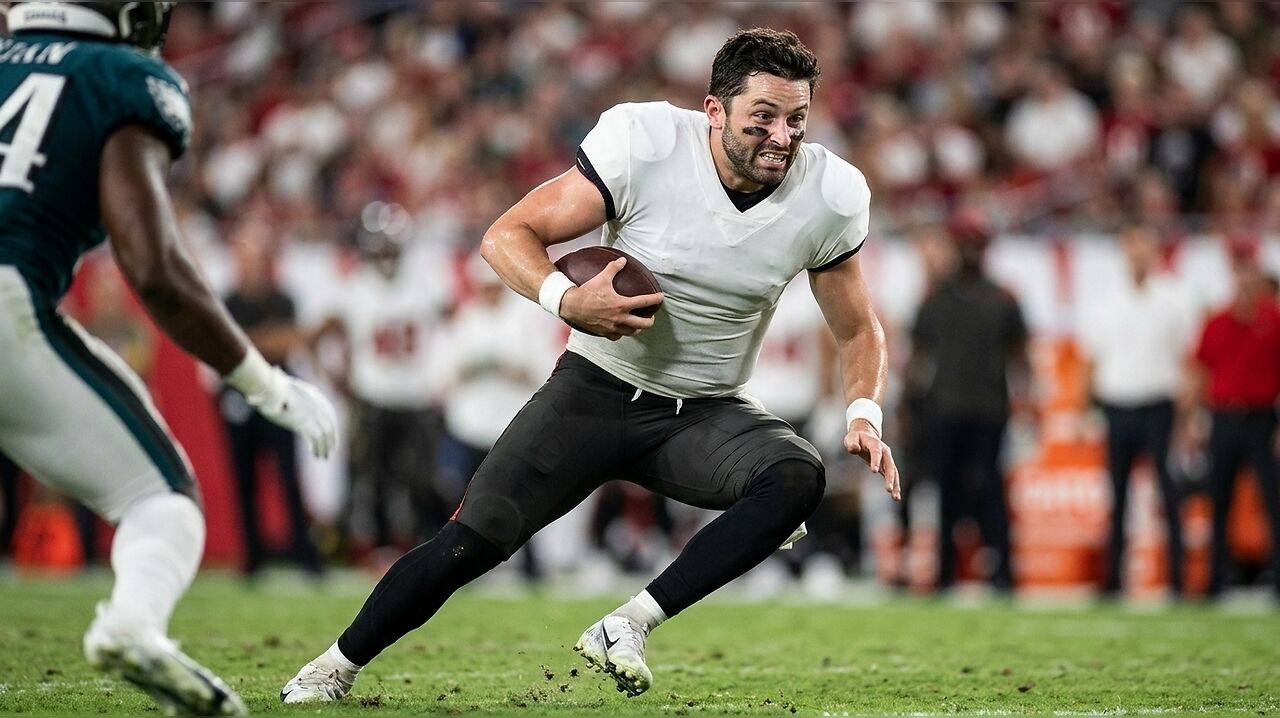
The 2026 NFL season has begun with a concerning trend under center, as eight starting quarterbacks have already been forced out of action through the first three weeks. The latest casualty, Tampa Bay’s Baker Mayfield, suffered a dislocated thumb during a loss to the Vikings, a game in which he was sacked six times. Mayfield is expected to miss three weeks, leaving the winless Buccaneers to turn to Jalon Daniels. This follows a chaotic "Monday Night Football" slate where the Bears were forced to start Case Keenum due to injuries to Caleb Williams and Tyson Bagent, while Jalen Hurts briefly left the field for a concussion assessment.
While the sight of backup quarterbacks taking the field has become a recurring theme, the data suggests that the current injury rate, while elevated, is not necessarily a historic outlier. Since the league expanded to 32 teams in 2002, the average number of quarterbacks to throw at least five passes through the first three weeks is just over 39. This season, that figure sits at 41. Although this is higher than the 35 passers seen in 2022, it remains consistent with historical fluctuations. In fact, the 1999 season saw 47 different signal-callers appear within the same timeframe, despite the league having fewer teams at the time.
Analyzing the Causes of the QB Injury Surge
Determining whether this season represents a genuine crisis requires looking beyond the raw numbers. The injuries sustained so far have been remarkably varied in nature. While players like Jaxson Dart—the only starter currently ruled out for the season following knee surgery—suffered contact-driven injuries, others have been the result of freak occurrences. Jayden Daniels dislocated his elbow after his foot was stepped on by a teammate, and Tua Tagovailoa sustained an oblique injury during a non-contact practice drill. These incidents suggest that the current spike may be more a product of randomness than a systemic failure in player protection.
There is also the question of whether increased contact is to blame. Quarterbacks are being hit on 22.2% of plays this season, a record high since data collection began in 2006. However, statistical analysis reveals a weak correlation between hit rates and injury frequency. Even as the league has introduced rules like the "Brady Rule" to protect passers, the evolving nature of the position—with quarterbacks scrambling more and extending plays outside the pocket—has naturally invited more defensive pressure. Despite these changes, the period between 2021 and 2025 actually represented one of the healthiest early-season stretches for quarterbacks in the last two decades.
The Economics of the Backup Quarterback
The recent injury wave has reignited the debate over how much NFL teams should invest in their backup signal-callers. While organizations frequently emphasize the importance of a reliable "QB2," the market for backup quarterbacks has remained surprisingly stagnant over the last decade. Even as the league’s salary cap has nearly doubled since 2016, teams have shown a collective reluctance to pay backups more than a small percentage of their total cap space.
Case Keenum’s efficient performance for the Bears on Monday night serves as a reminder that a strong offensive scheme can sometimes mitigate the loss of a starter. However, as teams continue to navigate an unpredictable season, the value of a high-end backup may soon be re-evaluated. If the current injury rate persists beyond a mere one-year blip, front offices may find themselves forced to prioritize depth at the most critical position on the field, potentially ending the era of bargain-bin backup contracts.