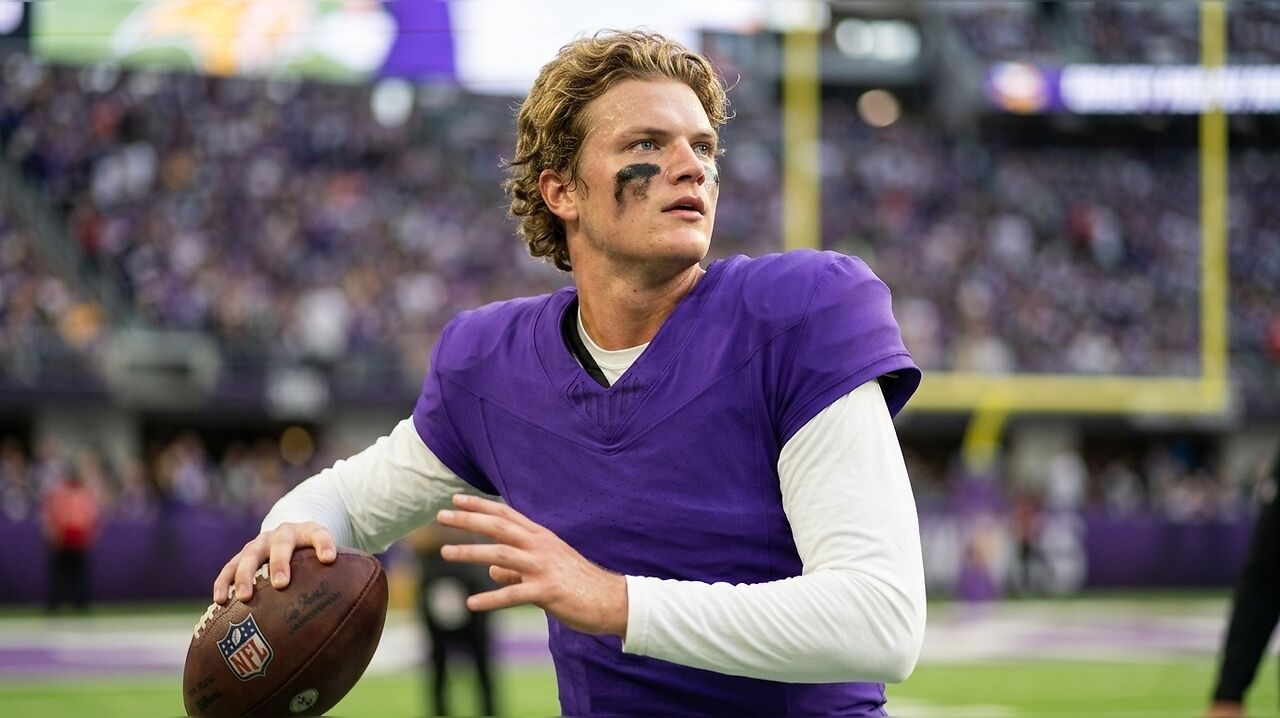
The New York Giants have moved to address their quarterback depth by acquiring J.J. McCarthy from the Minnesota Vikings in exchange for a 2027 fifth-round draft pick. The trade comes as the Giants navigate a difficult start to their season, marked by a significant injury to starting signal-caller Jaxson Dart, who is expected to miss the remainder of the regular season.
The decision to bring in McCarthy, the 10th overall selection in the 2024 NFL Draft, follows a brief and underwhelming tenure for Jameis Winston, who had recently signed a two-year, $13 million extension with the club. Winston struggled in relief appearances, recording a 19.0 QBR against the Rams and a 27.9 QBR in a narrow 12-7 victory over the Tennessee Titans.
Evaluating the Trade Impact
The Giants receive a C grade for the acquisition, largely due to the team's questionable roster management. Having committed to Winston shortly before the season, the front office now finds itself pivoting to a player whose professional trajectory has been challenging. McCarthy’s 2025 campaign was hampered by injuries, limiting him to 10 starts. His statistical output during that time was among the lowest in the league, ranking 38th in QBR and 43rd in pass rate over expected among qualified quarterbacks. Furthermore, he struggled with ball security, posting a 4.2% interception rate and a 9.4% sack rate.
Perhaps most concerning for the Giants is McCarthy’s recent standing within the Minnesota organization. During the most recent training camp, he failed to secure the starting role against Kyler Murray and subsequently lost the backup job to Carson Wentz. While the Giants are banking on the potential that made him a high draft pick, the move raises questions about why other veteran options, such as Mac Jones or Gardner Minshew II, were not prioritized.
Vikings Secure Value for McCarthy
The Minnesota Vikings earn a B+ grade for the transaction. By offloading a player who had fallen to third on their depth chart, the Vikings successfully recouped a fifth-round draft pick while clearing salary cap space for the 2026 and 2027 seasons. With McCarthy failing to secure a backup role behind Murray and Wentz, his market value was trending downward, making this an efficient move for the franchise.
While the Vikings face long-term uncertainty at the quarterback position heading into 2027, that reality remained unchanged regardless of McCarthy’s presence on the roster. By moving on now, the team gains draft capital and financial flexibility, effectively cutting ties with a player who had become surplus to requirements in Minnesota.