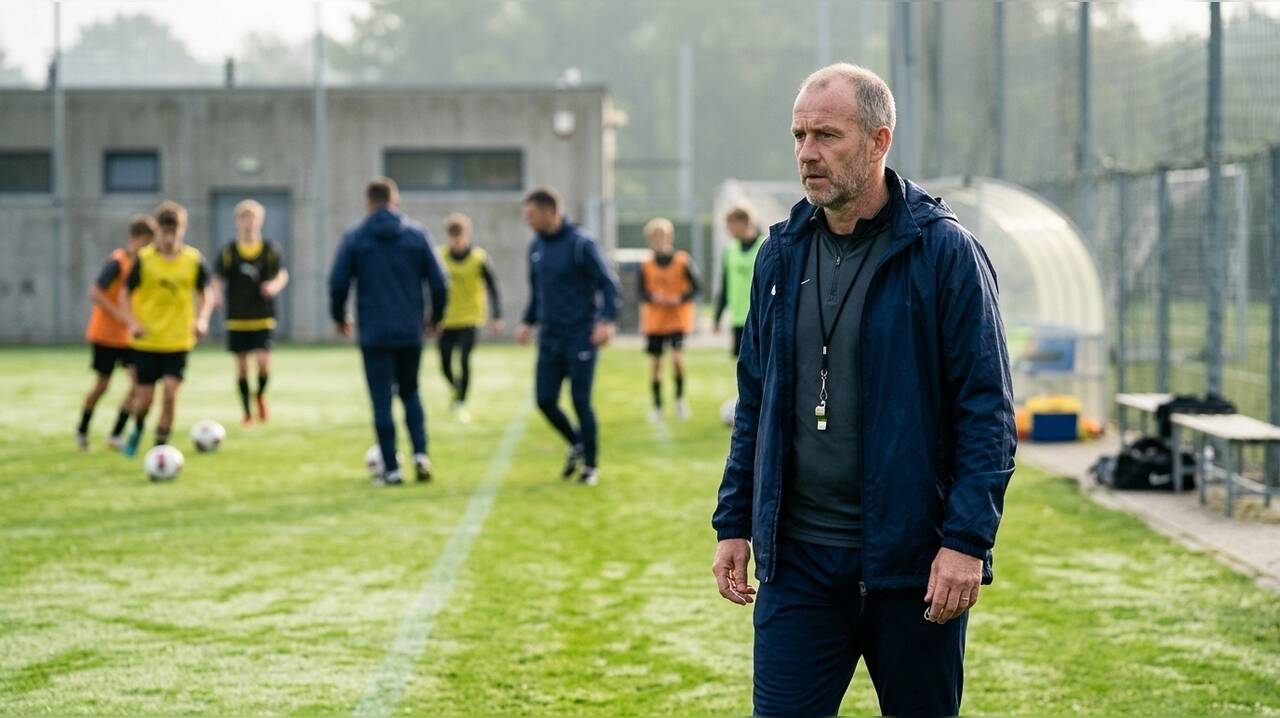
Schaffran contends that the responsibility for producing elite players lies squarely with domestic clubs rather than the national federation. By prioritizing the long-term career trajectory of prospects over the pursuit of youth trophies, Dortmund is aiming to create a more sustainable pathway for local players to reach the professional stage. This philosophy marks a significant departure from previous years, where the club enjoyed success in youth competitions without seeing a proportional transition of those players into the senior squad.
Rethinking the Development Pathway
A core issue identified by Schaffran is the premature specialization and tactical rigidity often imposed on young players. He notes that many coaches in Germany have historically prioritized winning matches at the youth level by applying senior-level tactics to children, a practice he believes stifles individual growth. Furthermore, high turnover rates have plagued the system; while the average player in Europe’s top five leagues changes academies roughly 1.6 to 1.7 times, the figure in Germany has historically been closer to 2.5. These frequent moves disrupt developmental continuity, prompting the federation to implement stricter transfer regulations to encourage clubs to invest in their own long-term projects.
Dortmund’s current blueprint focuses on cultivating a blend of technical mastery and high-level tactical intelligence. The club aims to marry the technical finesse often associated with Spanish football with the high-intensity, aggressive style that has become a hallmark of the Bundesliga. The ultimate goal, according to Schaffran, is to produce players who can read the game several seconds ahead of the opposition, ensuring they possess the mental acuity to complement their physical attributes.
The Challenge of Translating Youth Success
The transition from academy dominance to the professional game remains the most significant hurdle for young prospects. Schaffran highlighted the case of
According to the academy director, Moukoko’s youth success was largely driven by his ability to outrun opponents from the middle of the pitch—a tactic that rarely translates to the senior level unless the player possesses the unique profile of a Lionel Messi. Schaffran suggested that for the sake of long-term development, it is often better to sacrifice short-term goal tallies by training players in different roles, such as a No. 10 or No. 8, to ensure they become more complete professionals. By focusing on these developmental profiles, Dortmund hopes to produce players like Almugera Kabar, who has progressed through the club’s grassroots system to earn a first-team contract, serving as the model for the future of German football.