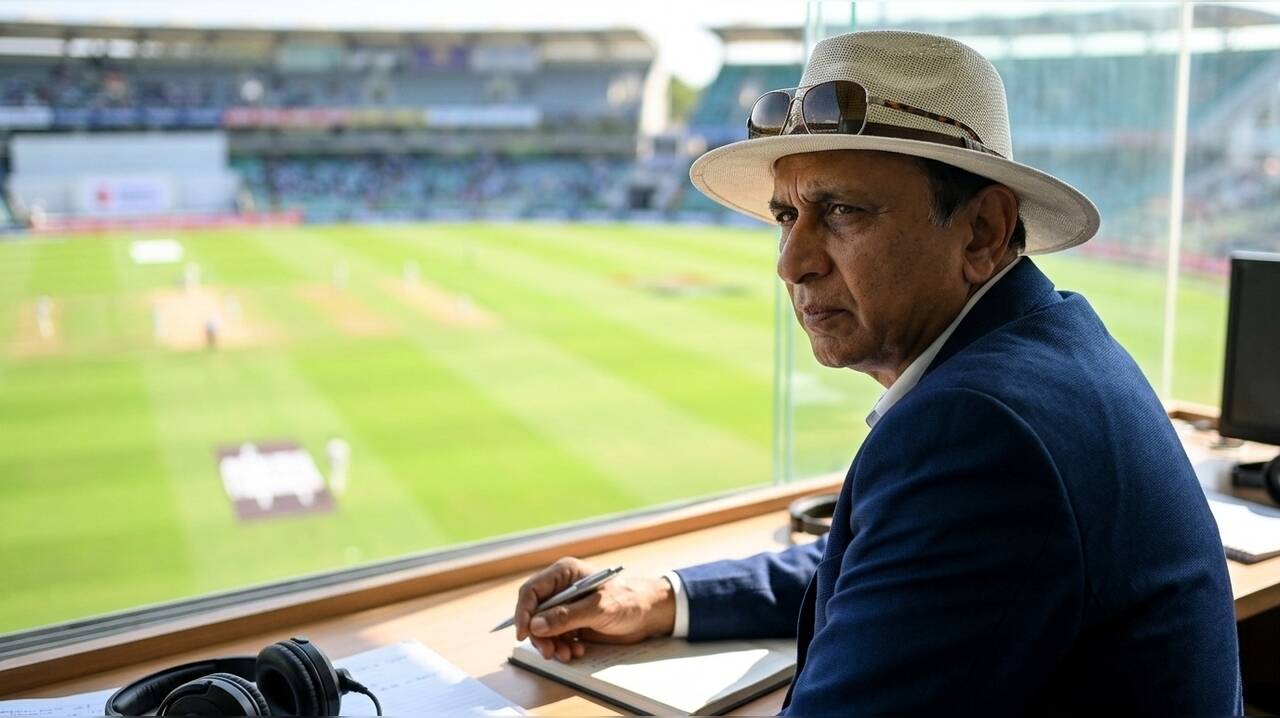
Legendary Indian cricketer
The debate gained traction following India’s recent Test series against Sri Lanka. While India secured a 1-0 series victory, their inability to complete a 2-0 sweep in the second Test in Colombo highlighted ongoing disciplinary issues. Despite needing only four wickets on the final day, India was held to a draw by a resilient Sri Lankan side, with the frequency of no-balls from Indian spinners, including Ravindra Jadeja and debutant Saransh Jain, drawing significant scrutiny.
Addressing the root of the no-ball problem
Gavaskar argued that overstepping is a fundamental error that remains entirely within a player's control. Writing in his column for Mid-Day, the former captain emphasised that with modern technology such as tape measures available to mark run-ups, there is no justification for bowlers failing to stay behind the crease. He warned that these avoidable mistakes can fundamentally alter the outcome of a match and must be addressed with urgency rather than by altering the game's structure.
Regarding the potential introduction of free hits, Gavaskar expressed strong opposition, noting that batting has already become increasingly simplified due to modern regulations. He pointed to the current restrictions on bouncers and the trend of shorter boundaries as factors that have already made run-scoring easier. Introducing further penalties for bowlers would, in his view, be an unnecessary step that undermines the traditional challenges of the longest format.
Proposed financial deterrents for accountability
Instead of changing the rules of the game, Gavaskar proposed a system of financial penalties to enforce discipline. He suggested that players should face fines for every no-ball, with the penalty amount doubling for each subsequent transgression. Furthermore, he recommended that the bowling coach should also be held partially responsible, suggesting that half the fine amount should be levied against them as well.
Gavaskar suggested that the funds collected from these fines could be repurposed for team activities, such as a final dinner before the squad disperses. He also proposed expanding this accountability model to other on-field errors, such as failing to back up a throw. By allowing the team to vote on these penalties, Gavaskar believes the process could foster better accountability while serving as a team-bonding exercise. Ultimately, he maintains that India must focus on correcting these preventable errors to maintain their competitive edge in the World Test Championship cycle.