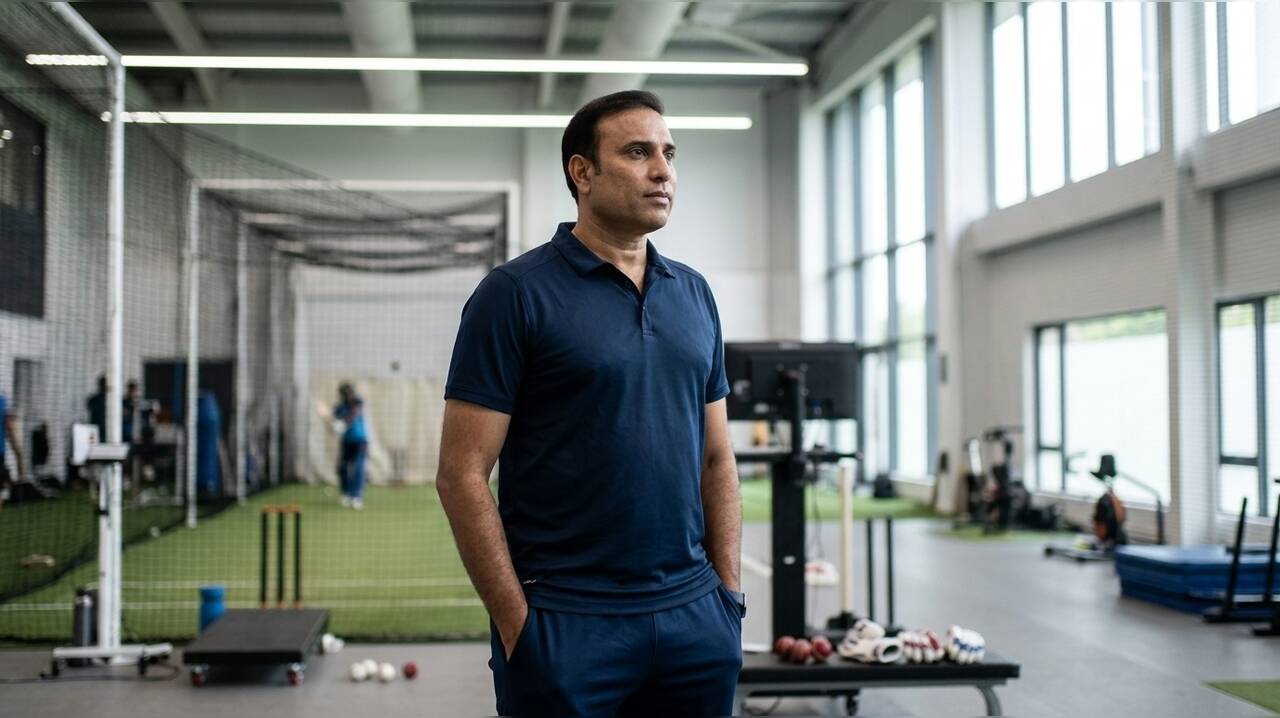
Reflecting on his time at the helm, Laxman highlighted the importance of broadening the CoE’s reach. While the facility serves India’s top-tier contracted players, he stressed that the long-term health of the national team depends on the development of the domestic and pathway structures. By providing non-contracted players with access to elite coaching, sports science, and performance technology, the BCCI aims to identify and refine potential talent long before they reach the international stage.
Building a Sustainable Pipeline
The scale of high-performance operations has expanded significantly under Laxman’s guidance. The CoE now conducts regular programmes for men and women across age groups, including U-16, U-19, and U-23 levels, alongside specialized camps for fast and spin bowlers. According to Laxman, the centre now directly supports over 150 players annually. This structured approach is intended to create a continuous, seamless pathway that prepares young cricketers for the rigours of senior international competition.
A key focus of this development has been the integration of a dedicated system for women’s cricket. Laxman noted that the BCCI is investing in specialized coaching and support staff tailored to the specific requirements of the women’s game, rather than simply replicating the men’s model. This includes the U-15 category, which was introduced three years ago to identify talent early, a move that has already seen success with players like G Kamalini progressing to the national side.
Mentorship and the Future of Coaching
Beyond infrastructure, Laxman has placed a heavy emphasis on coach education. He observed a positive trend of active and former first-class players pursuing coaching qualifications, noting that the transition from player to mentor requires a fundamental shift in mindset. Through ongoing mentoring, the CoE encourages former players to move away from focusing on their own performance and toward the objective of helping others reach their potential.
Laxman remains particularly proud of the CoE’s shift in identity. He noted that the facility is no longer viewed merely as a rehabilitation centre for injured players, but as a hub for skill development and physical conditioning. As he prepares to step down, his focus remains on the collective success of the ecosystem—a network of coaches, analysts, and administrators working in unison to ensure that the next generation of Indian cricketers is equipped to perform at the highest level for years to come.