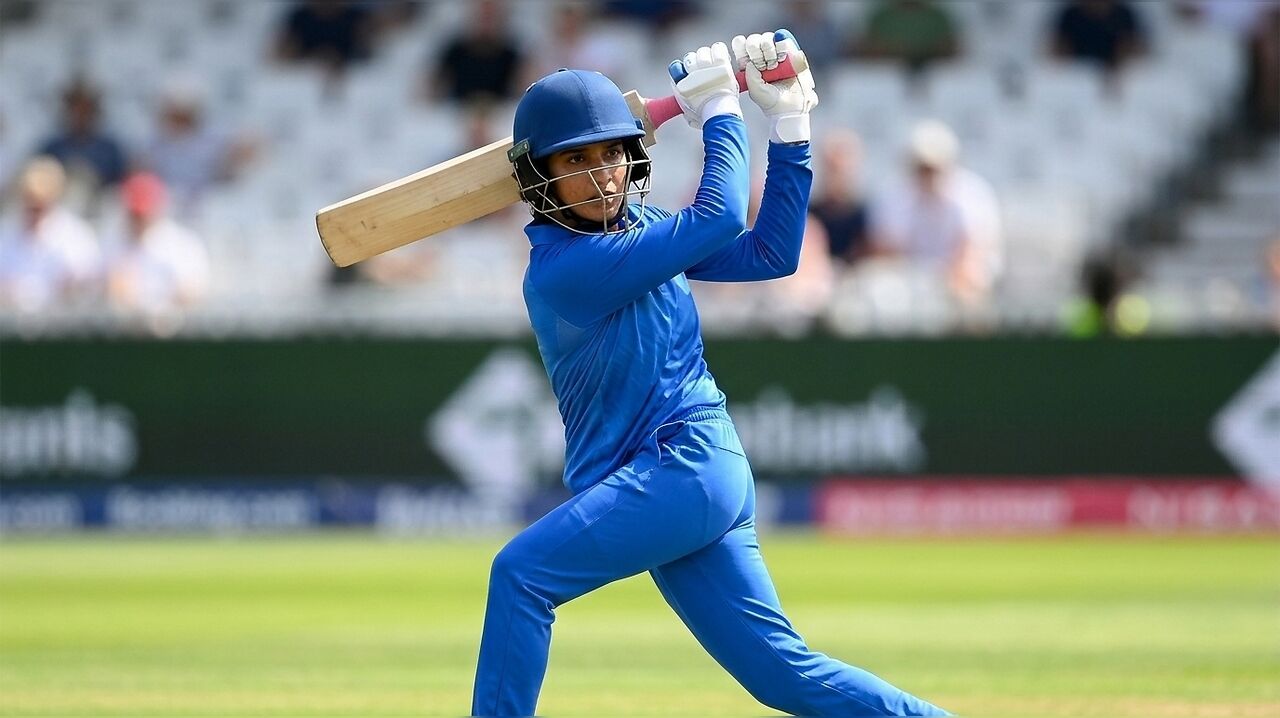
Entering the match requiring only 13 runs to reach the landmark, Mandhana wasted little time in asserting her dominance. After India elected to bat first, she began her innings with two boundaries in the opening over before striking a six in the third over to officially cross the 11,000-run threshold. Her total international tally now spans across Tests, ODIs, and T20Is, building upon her previous records in the sport.
A prolific run of record-breaking milestones
This achievement follows a remarkable period of form for the left-handed batter. Earlier this month, Mandhana surpassed former India captain Mithali Raj’s record of 10,868 runs to become the leading run-scorer in women's international cricket. That milestone was secured during a commanding 124-run performance against Hong Kong in the Women's Asia Cup, which also marked her 18th international century, moving her past Meg Lanning and Laura Wolvaardt for the most hundreds in the women's game.
Mandhana’s influence has been particularly profound in the T20 format. During the Asian Games semifinal against Bangladesh, she overtook New Zealand’s Suzie Bates to become the leading run-scorer in women's T20Is. In that same match, she also became the first Indian woman to hit 100 sixes in the shortest format, underscoring her aggressive approach at the top of the order.
Partnership dominance and tournament context
In the gold-medal clash, Mandhana continued her momentum by racing to a half-century off just 31 balls. Her opening partnership with Shafali Verma remains a cornerstone of India’s success, with the duo extending their record as the most prolific pairing in women's T20I cricket. Their combined partnership runs have now surpassed 4,000, placing them well ahead of the next most successful pair, the UAE’s Esha Oza and Theertha Satish.
The final against Sri Lanka serves as a pivotal moment in the tournament, with India aiming to defend the Asian Games title they secured in their previous appearance. Having navigated past Japan and Bangladesh to reach the final, India’s campaign has been defined by consistent performances from their top order. For Sri Lanka, the match represents an opportunity to secure their first-ever Asian Games gold medal, following previous podium finishes in 2014 and 2022.