Former Indian cricketer
Manjrekar took to the platform X to express his disapproval, suggesting that the young players should reserve such displays of aggression for more formidable opponents. He remarked that Pakistan had become a soft target and encouraged the team to demonstrate their competitive spirit against nations such as Australia, South Africa, New Zealand, or England instead.
A Dramatic Turnaround in the Final
The final was a high-scoring encounter that appeared to be slipping away from India when they were reduced to 252/8 in the 42nd over. However, a resilient lower-order fightback shifted the momentum of the match. Manal Chauhan played a pivotal role, scoring 47 off 32 balls, and combined with Mohit Ulva for a 57-run partnership for the ninth wicket that kept India's hopes alive.
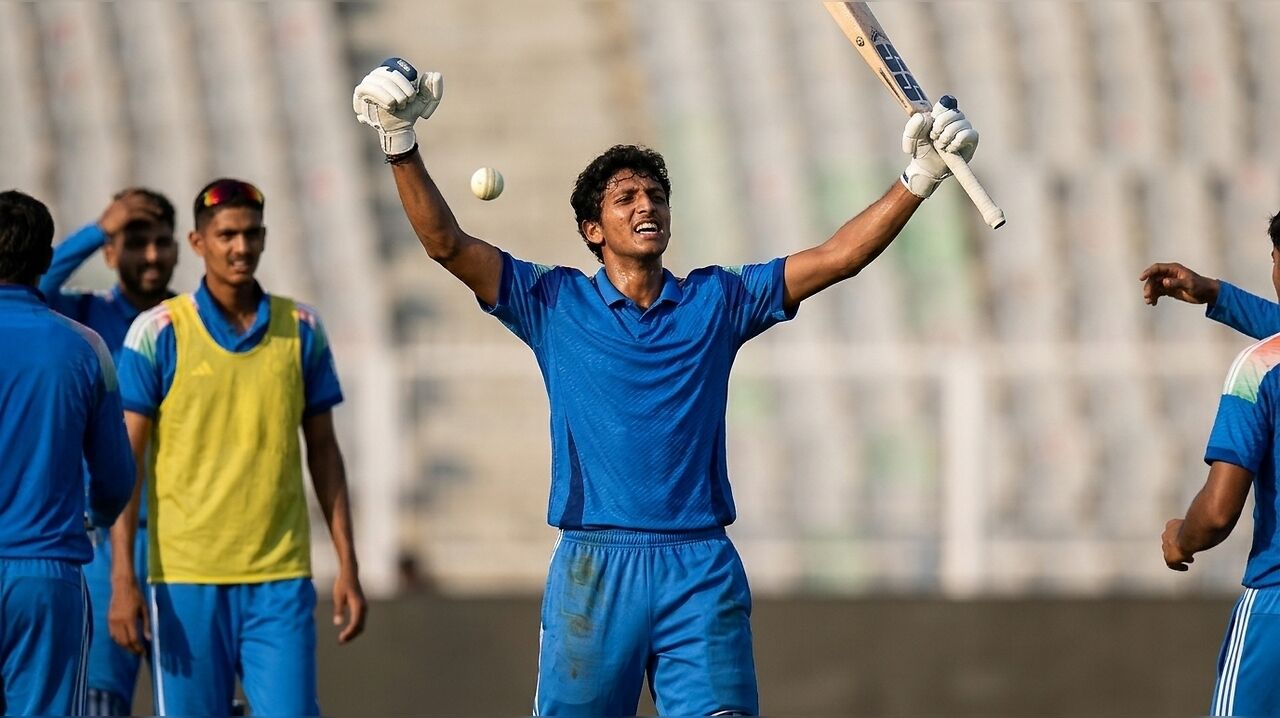
Even after Chauhan’s departure, with 36 runs still required, the tail-end resistance continued. Mohit Ulva anchored the chase alongside No. 11 batter C Venkata, who remained unbeaten on 11 from eight balls. With eight runs needed off the final over, the pressure mounted, but Mohit held his nerve to strike a boundary off the final delivery against leg-spinner Ahmed Hussain, securing the title for India. Mohit finished the match with an impressive 49 not out from just 26 deliveries.
Context of the Asia Cup Final
India’s pursuit of 338 began with a solid foundation laid by captain Lakshya Raichandani, who scored 80, and Aaryavir Sehwag, who contributed 58. The pair shared a 95-run opening stand before the middle order faltered, including the dismissal of Anvay Dravid, which necessitated the late-game heroics.
Pakistan’s competitive total of 337/9 was built on a century from Usman Khan, who scored 107, supported by Abdul Qadir’s 80 and captain Farhan Yousaf’s 60. Kavya Patel was the standout performer with the ball for India, claiming four wickets. While the victory secured the Under-19 Asia Cup trophy for India, the post-match discourse has been dominated by the debate surrounding the team's on-field behavior.