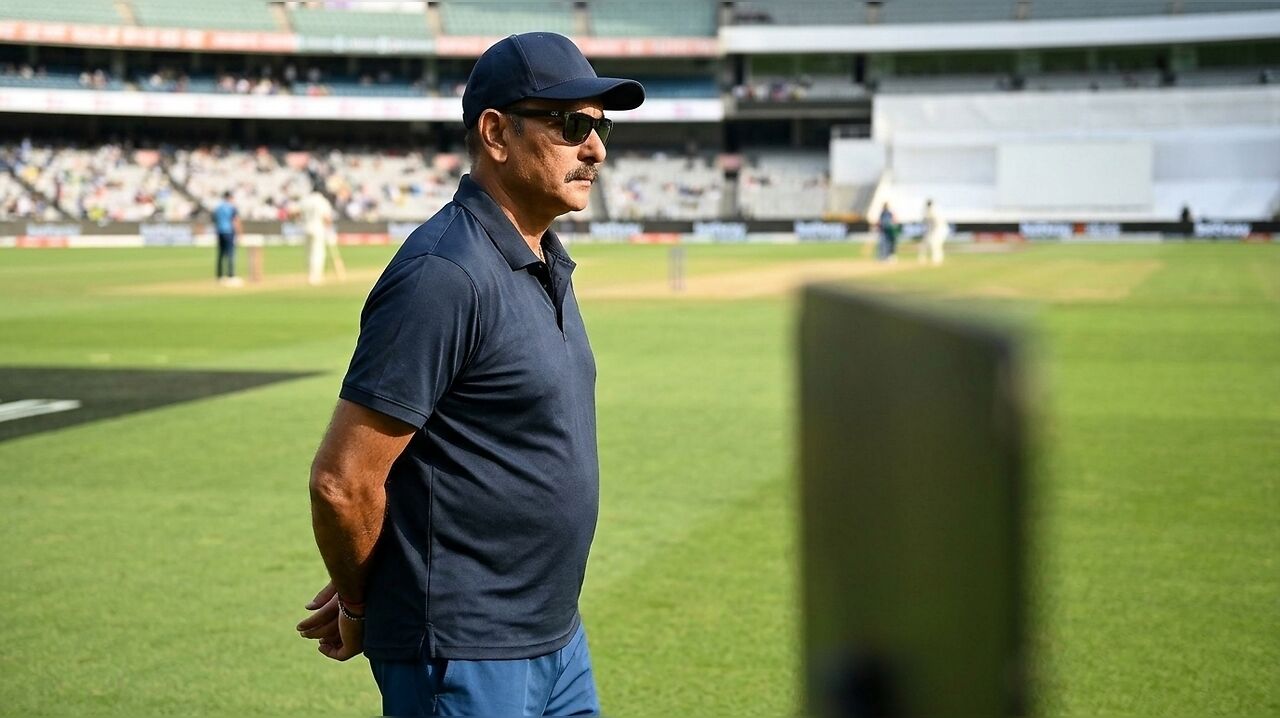
Former India head coach
In a conversation with Ian Smith for Sky Sports, the former all-rounder explained that the difficulty of coaching stems from a lack of agency once the match begins. While players have direct influence with the bat or ball and commentators hold the microphone to shape the narrative, a coach is largely a spectator once the players cross the boundary rope, leaving them to watch the game unfold without the ability to intervene directly.
The Pressure of National Expectations
Shastri described the coaching environment as one where the pressure is constant, famously remarking that it feels like having a gun to your head. He emphasized that the expectations of the Indian public are relentless, regardless of external circumstances such as the COVID-19 pandemic. According to Shastri, the mandate to win consistently leaves no room for error, creating an environment where the coach is constantly under scrutiny.
Despite the high-stakes nature of the job, Shastri acknowledged that the rewards are equally significant. He noted that successfully navigating these pressures provides a level of professional satisfaction and respect that he has not found in other roles. His tenure, which spanned from July 2017 to November 2021, was marked by several notable achievements that defined his time in the dressing room.
A Legacy of Success and Passion
During his four-year stint, Shastri oversaw a period of sustained excellence for the Indian Test side. Under his guidance, the team secured two consecutive Test series victories in Australia, including the landmark 2018-19
Reflecting on his broader career, which has seen him transition seamlessly between roles, Shastri credited his longevity in the sport to an enduring passion for the game. He suggested that without a deep-seated love for cricket, it would be impossible to maintain the enthusiasm required for the daily grind of broadcasting or the intense demands of coaching. For Shastri, the privilege of being involved in the sport at the highest level remains the primary driver of his career, a sentiment he shares with fellow broadcasters who have spent decades calling the game's most dramatic moments.