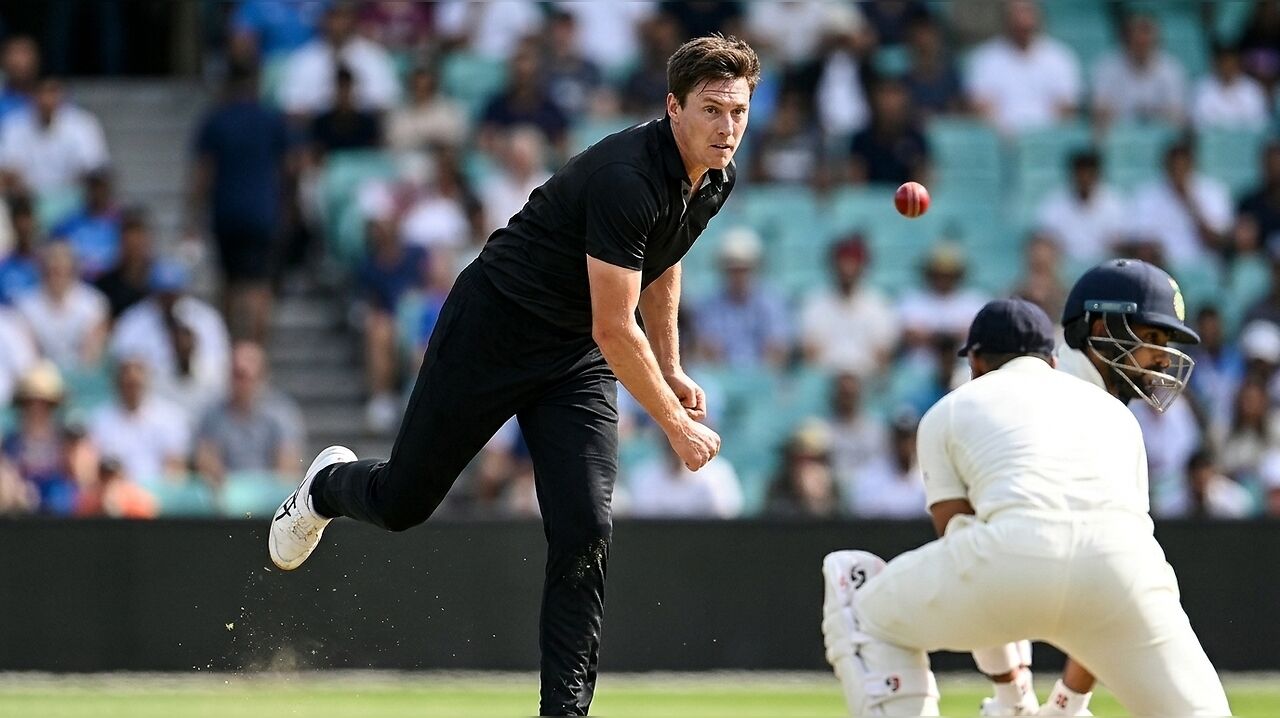
India’s pursuit of a 334-run target crumbled rapidly as they were bowled out for just 89. The defeat stands as the second-largest margin by runs in India’s ODI history. The collapse began when Henry squared up Rohit Sharma, finding the outside edge for a catch at first slip. He followed this by bowling Virat Kohli with a delivery that nipped back to hit the stumps, before trapping debutant captain Shreyas Iyer lbw for a golden duck. The visitors did not register their first run until the 17th delivery of the innings.
New Zealand Dominance and India’s Tactical Struggles
The pressure applied by Henry was complemented by Kyle Jamieson, who utilized his height to extract significant bounce. Jamieson accounted for Ruturaj Gaikwad, leaving India reeling at 9/4. While Ishan Kishan and Axar Patel provided a brief moment of resistance with a 44-run partnership, and Naman Dhir added 21, the Indian lineup had no answer for the pace and movement of the New Zealand attack. Matt Fisher contributed with 3/31, and Henry returned to clean up the tail, finishing with career-best ODI figures.
The result has prompted scrutiny regarding India’s team selection, particularly the decision to omit Mohammed Siraj on a surface that clearly favored seam bowlers. The loss leaves India with significant questions to address regarding their technical approach to movement-heavy conditions, a concern that looms large with the 2027 ODI World Cup in South Africa on the horizon.
New Zealand’s total of 333 was built on the back of a career-best 125 from Will Young. After Tim Seifert provided an aggressive start with 58 off 48 balls, Young capitalized on two early dropped chances to anchor the innings. Despite a late fightback from India, who claimed 6/77 in the final 13.1 overs, the damage had been done. With the series now tied, the two teams head into Sunday’s final ODI, though New Zealand will be without the services of Henry and Jamieson, who are departing for Test duty.