

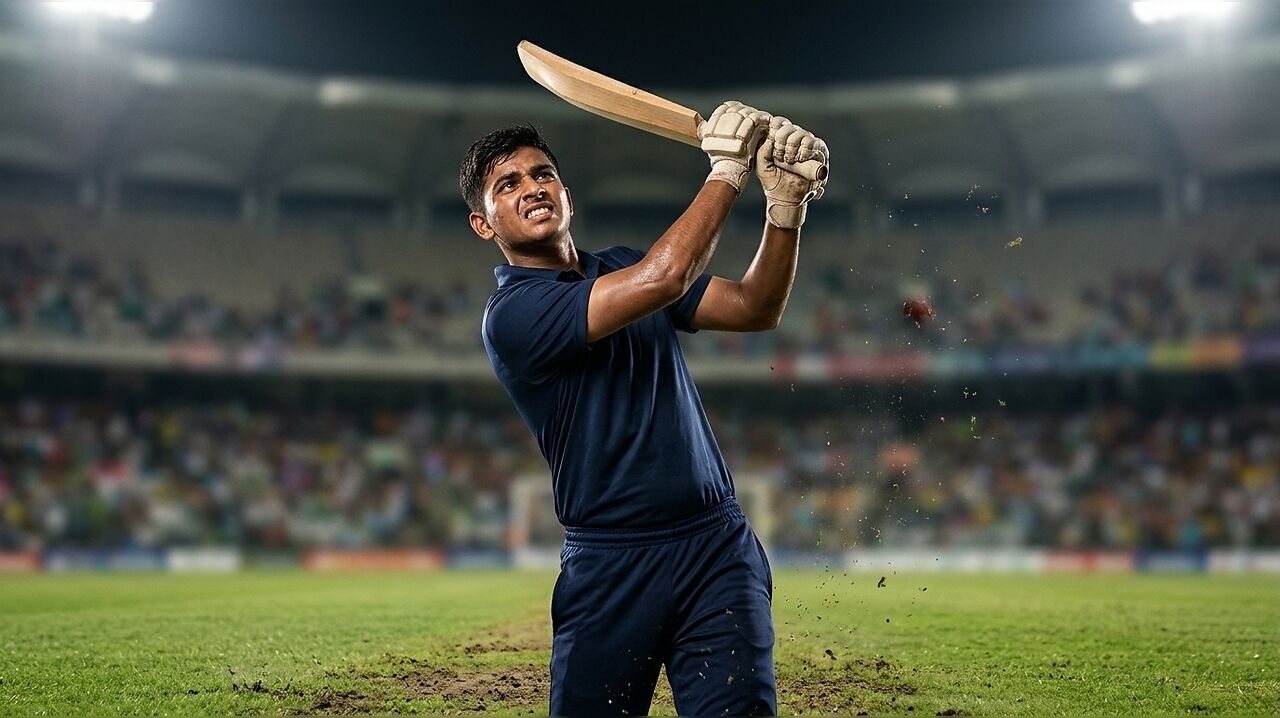
With the T20I series against New Zealand already secured, India’s coaching staff is shifting its focus toward long-term strategy, specifically identifying the core batting unit for the 2028 T20 World Cup in Australia and New Zealand. The emergence of 15-year-old
The duo dismantled the New Zealand bowling attack, putting together a 133-run stand in just seven overs. While Abhishek’s century dominated the headlines, Sooryavanshi’s fearless 45 off 19 balls proved equally vital. The teenager’s performance was particularly notable for the clarity it brought to his game; after struggling at No. 3 in Christchurch, his move to the top of the order allowed him to play with the aggressive, high-tempo intent that defines his natural style.
A shift toward tactical flexibility
The successful trial of this opening pair was made possible by the selflessness of Sanju Samson, who moved down to No. 3 to accommodate the youngster. Samson, who has been a mainstay at the top of the order with 1,166 runs in 37 matches alongside Abhishek, earned praise from his teammate for his willingness to adapt. Abhishek noted that such flexibility is becoming a hallmark of the current squad under head coach
This culture of adaptability is central to how India plans to integrate its deep pool of talent. With Ishan Kishan also proving his versatility—highlighted by his match-winning 80 off 46 balls at No. 5 against Sri Lanka in the Asian Games—the management is moving away from rigid batting slots. Gambhir has consistently emphasized that only the top two positions are fixed, with the remainder of the order remaining fluid to suit match conditions and personnel.
For Sooryavanshi, the Wellington match served as a validation of his role as an opener. By attacking from the first ball, he provided the momentum that allowed Abhishek to thrive at the other end. As India looks toward the future, the ability to field a lineup that includes Abhishek, Sooryavanshi, Samson, and Kishan without sacrificing balance remains the primary objective. With the series result already in hand, the team is now in a position to prioritize these long-term experiments over immediate, short-term safety.
