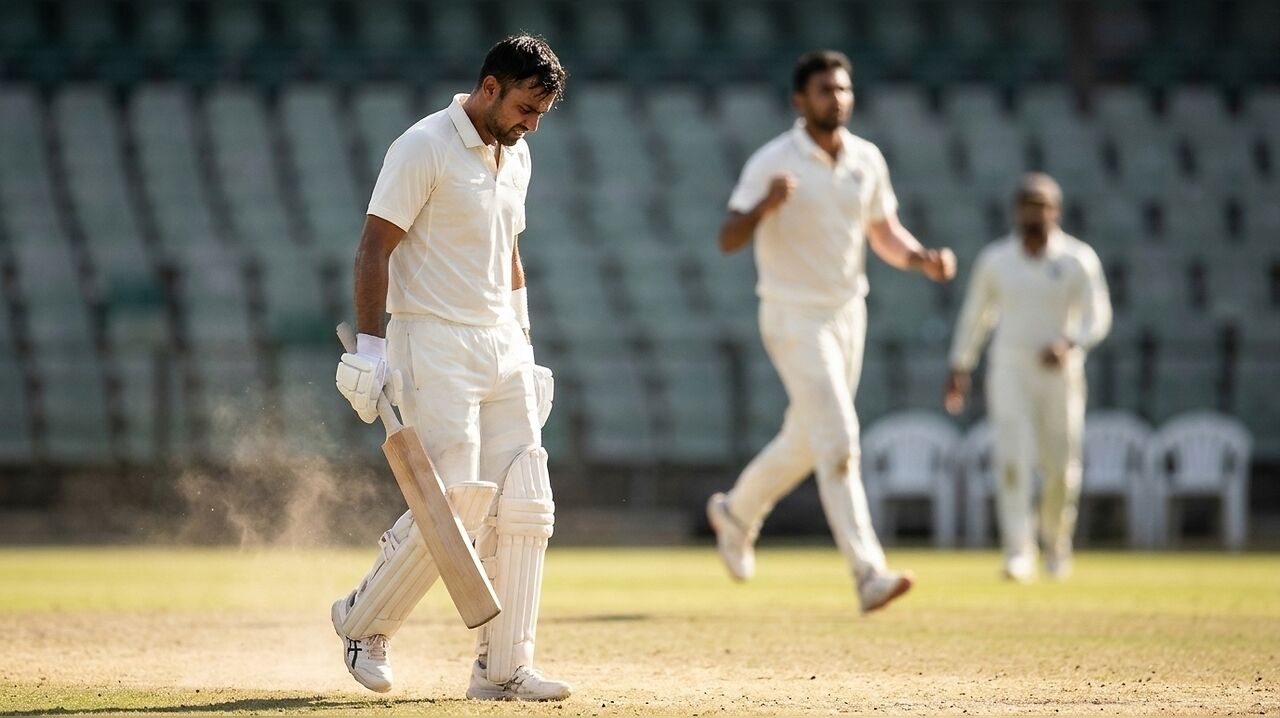
India’s pursuit of a 334-run target against New Zealand at Bay Oval on Friday descended into chaos as the visitors were reduced to 9/4 in a top-order collapse that mirrored one of the most infamous moments in the nation's cricketing history. The performance marked a rare and unwanted milestone, as India lost their first four wickets for fewer than 10 runs for only the second time in
The disaster began with the very first delivery of the innings, as
A historic collapse and individual milestones
The early wreckage at Mount Maunganui saw both Rohit Sharma and Virat Kohli dismissed for ducks. This marked only the second time in their respective ODI careers that both stalwarts failed to score in the same match, with the only previous instance occurring against Sri Lanka in Dambulla in 2010. Furthermore, India joined a select group of teams to have lost their first three wickets without scoring a single run in an ODI, a list that includes Pakistan, Bangladesh, and Australia.
Matt Henry proved to be the primary architect of the destruction, finishing with figures of 3/14. The pacer has historically troubled the Indian top order, having previously dismissed both Rohit and Kohli three times each in the format. His performance on Friday contributed to India recording 26/4 in the first 10 overs, which stands as their lowest score in that phase since 2018.
Context of the performance
The dismissal of Rohit Sharma on the first ball of the innings added him to a list of Indian batters who have suffered the same fate, including former players like Sourav Ganguly, Virender Sehwag, and Sunil Gavaskar. While the 1983 collapse against Zimbabwe was famously salvaged by Kapil Dev’s 175 not out, the current Indian side faced a daunting task to recover from the early damage inflicted by the New Zealand bowling attack. The match at Bay Oval will be remembered for the clinical efficiency of the New Zealand bowlers and a rare, collective failure of the Indian top order that left the team reeling early in their chase.