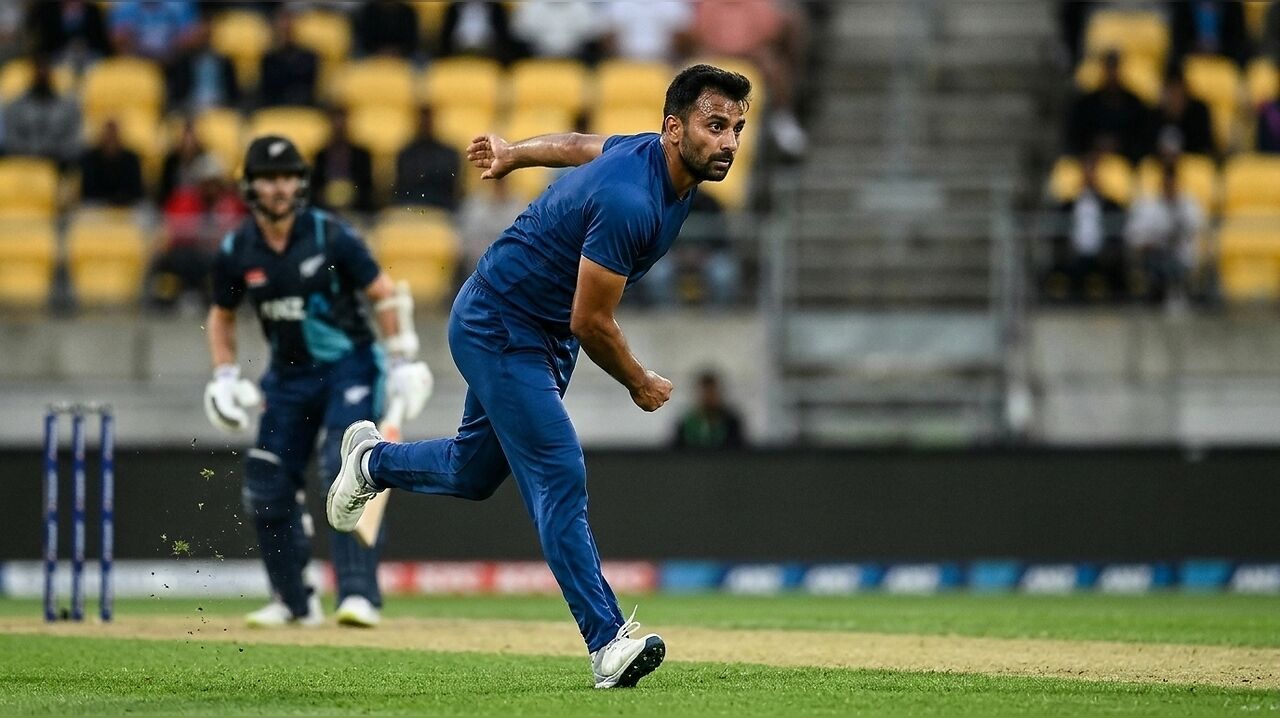
India’s bowling unit produced a clinical display of disciplined seam bowling during the second ODI against New Zealand at the Hnry Stadium in Wellington on Saturday. After captain Shubman Gill won the toss and opted to field first, the visitors immediately put the Black Caps under immense pressure, mirroring a difficult start the hosts previously faced against India during the 2019 World Cup semifinal in Manchester.
The opening five overs proved to be a significant struggle for the New Zealand batting lineup, as they managed to accumulate only seven runs for the loss of one wicket. The intensity maintained by the Indian bowlers ensured that scoring opportunities remained scarce throughout the initial powerplay phase.
Arshdeep and Nabi set the tone
Auqib Nabi, sharing the new ball, made an immediate impact by claiming his maiden ODI wicket. Tim Seifert, having failed to score from his first five deliveries, attempted a drive against a full delivery. The timing proved faulty, resulting in a chip toward mid-on where Anshul Kamboj secured a diving catch. This dismissal left the hosts at 2-1, forcing Henry Nicholls to join Young at the crease.
Tight lines stifle the hosts
Following the early wicket, the scoring rate remained stagnant as the Indian bowlers continued to exploit the conditions. Auqib consistently challenged Nicholls with deliveries that moved back into the left-hander, while Arshdeep maintained his accuracy from the opposite end. The hosts could only manage two runs in the third over and another two in the fourth, highlighting the effectiveness of the Indian bowling plan.
By the conclusion of the fifth over, the scoreboard reflected the dominance of the Indian attack, with New Zealand struggling at 7-1. The performance underscored a disciplined approach from the visitors, who successfully restricted the home side's ability to build any early momentum in the contest.