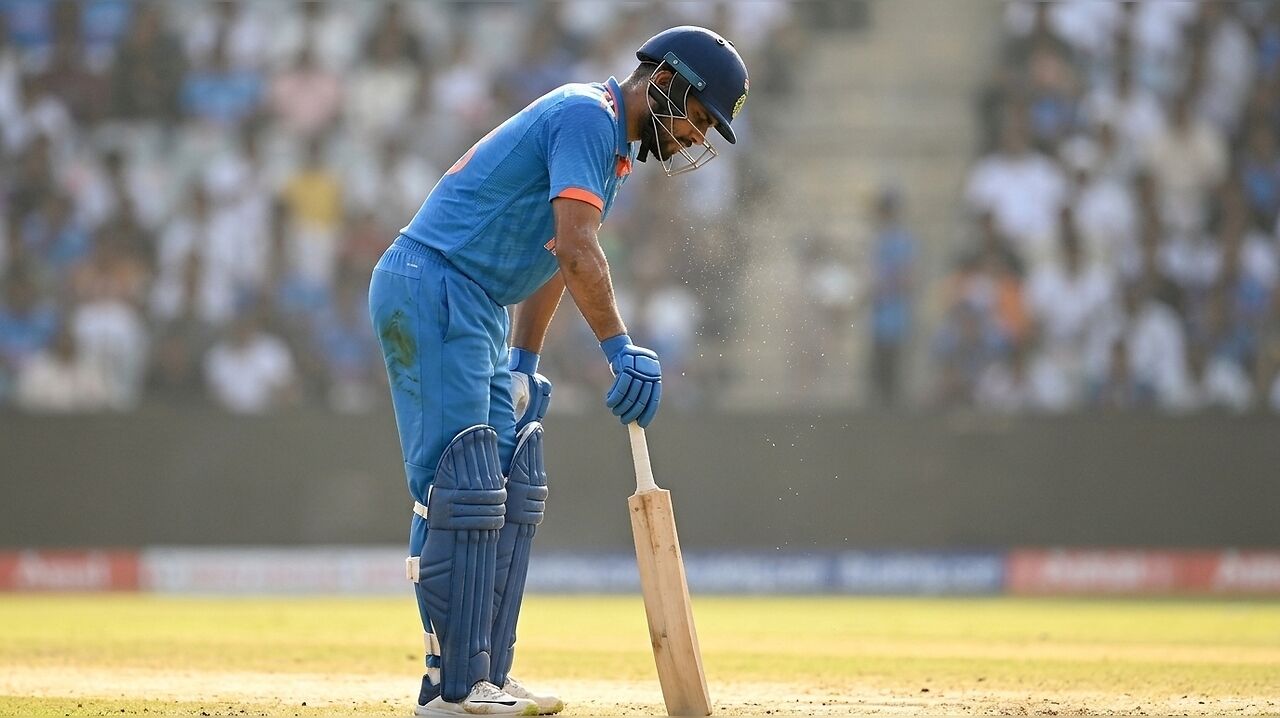
Former India captain
During the post-match presentation, Varma, who scored 100 off 149 balls, suggested that the team’s defeat was linked to the dismissal of Shahbaz Ahmed. Varma noted that had Shahbaz remained at the crease for two more overs, he believed he could have successfully finished the game. Shahbaz had contributed 56 runs in a 112-run partnership with his captain, but his departure in the 43rd over preceded a late collapse that saw India A lose their remaining wickets.
Rahane Emphasises Dressing Room Protocol
Speaking on Sony Sports Network, Rahane expressed his disapproval of the public nature of the comments. He argued that singling out a player in front of the media is counterproductive and that such feedback should be reserved for the privacy of the dressing room to maintain team morale and confidence. Rahane noted that while he understands the pressure of captaincy and the difficulty of navigating post-match interviews, it is a vital skill for young leaders to master.
Rahane acknowledged that Varma’s comments may not have been malicious, suggesting that the frustration of a loss can sometimes lead to unintended phrasing during interviews. However, he maintained that the experience should serve as a significant learning opportunity for the young captain regarding communication and leadership. He expressed confidence that Varma would grow from the situation, noting that managing teammates and handling public perception are essential components of the captaincy role.
Scrutiny Over Scoring Rate
The post-match discussion also highlighted broader questions regarding Varma’s own performance during the chase. While he eventually reached his century, the innings drew attention for its slow tempo, particularly in the early stages. Varma’s century came off 140 balls, marking the second-slowest List A century by an Indian batter. His initial struggle was contrasted with the aggressive start provided by Abhishek Sharma, who scored 60 off 34 balls while Varma had managed only six runs from his first 34 deliveries.
Despite the criticism, Varma defended his approach, stating that his primary goal was to take the game as deep as possible. He emphasized that individual milestones are secondary to team success and that he felt the responsibility as captain to anchor the innings. Varma noted that he remains committed to taking on the pressure of such situations, even as he continues to develop his leadership style.