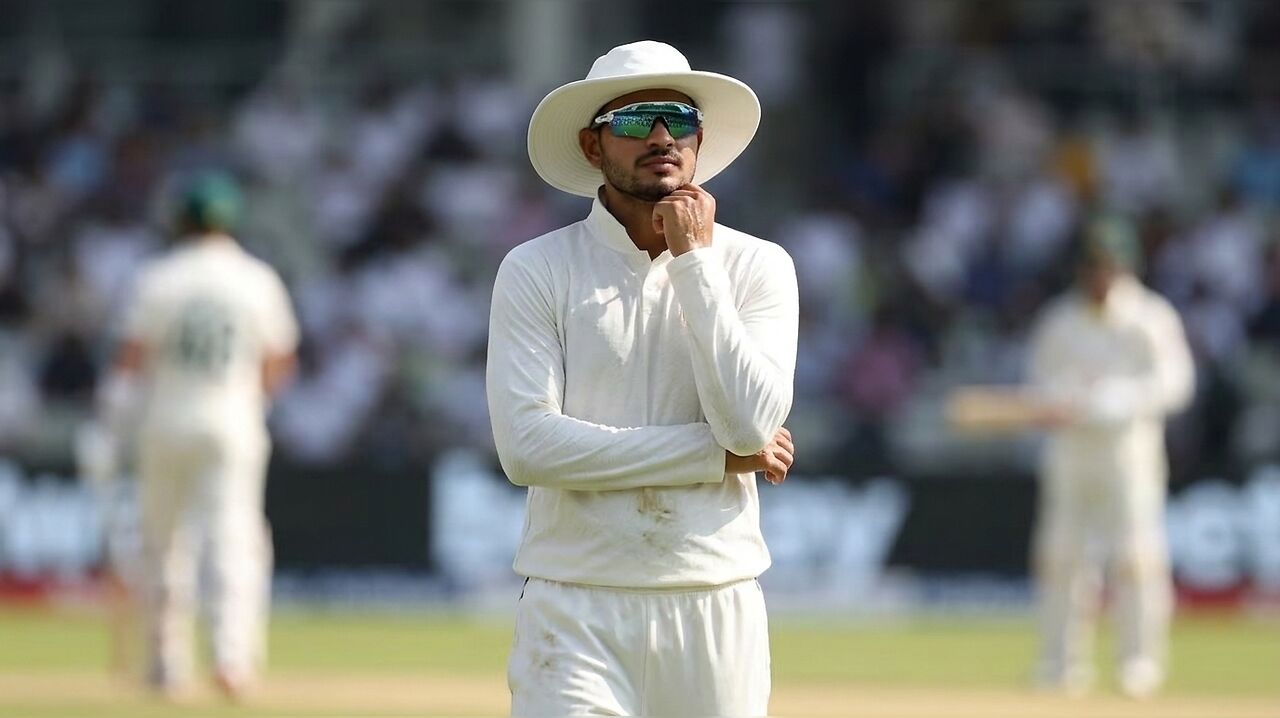
Former India wicketkeeper-batter
The hosts navigated the final day with relative ease, rarely appearing troubled by the Indian attack. Aside from a missed run-out opportunity and a difficult chance that fell to Devdutt Padikkal at short leg, India struggled to create consistent pressure. Critics, including commentators Simon Doull and Sunil Gavaskar, pointed to Gill's tactical approach, specifically his reliance on defensive field placements during critical phases of the final day.
Tactical scrutiny on field placements
Karthik expressed confusion over the decision to keep boundary riders in place while the team was actively hunting for wickets. He argued that such defensive settings not only fail to put pressure on the batters but also influence the mindset of the bowlers, allowing the opposition to rotate the strike with minimal risk. Karthik noted that modern batters are comfortable playing lofted shots, making the presence of deep fielders less effective than maintaining pressure with close-in catchers.
"I would like to ask Gill the logic behind that, having boundary riders in phases of play where you are looking to get wickets and when you don't mind boundaries being given," Karthik stated. He highlighted that this tactical trend was also observed during India's previous series in Sri Lanka, where they similarly failed to secure a win from a dominant position in Colombo.
Pitch conditions and future outlook
Despite the criticism directed at the captain, Karthik defended the timing of India's first-innings declaration, where the team posted 720/9. He dismissed suggestions that an earlier declaration would have altered the result, citing the nature of the pitch as the primary obstacle. According to Karthik, the surface was so heavily tilted in favour of the batters that New Zealand likely would have held out regardless of the time remaining in the match.
The focus now shifts to the second Test, scheduled to begin at Hagley Oval on Friday, November 27. With India's points percentage in the 2025-27