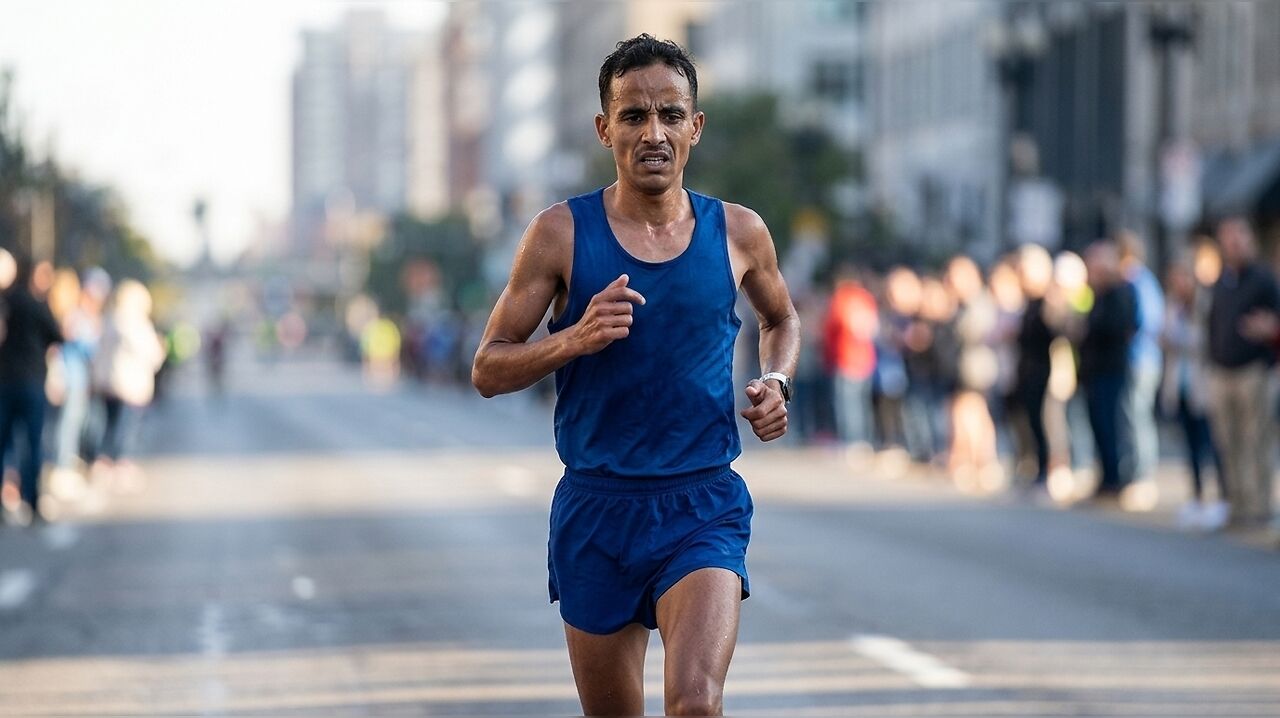
The race, which commenced at 4 a.m. IST, featured a field of 19 athletes, including Barwal and his compatriot Kartik Karkera. As the national record-holder, Barwal demonstrated his pedigree early, maintaining a consistent pace within the lead pack as the marathon unfolded across the 42.195-kilometre course.
A Tactical Masterclass on the Continental Stage
Barwal’s strategy proved effective from the outset. By the halfway point, he had firmly established himself in second position. As the intensity increased and the field began to stretch, the Indian runner remained composed, reaching the 35-kilometre mark with a time of 1:49:29, still holding onto the silver-medal spot.
In the final stages of the race, Japan’s Ichitaka Yamashita pulled ahead to create a gap. Despite trailing the leader by approximately 26 seconds with only a few kilometres remaining, Barwal successfully defended his position against the rest of the field to cross the finish line in second place. Meanwhile, Kartik Karkera completed the course in 2:22:41, finishing in 17th position.
Building on a Legacy
This silver medal serves as a significant milestone for Indian athletics, representing the fourth marathon medal in the country's Asian Games history. The previous successes date back to the inaugural 1951 Asian Games, where Chhota Singh secured gold and Surat Singh Mathur took bronze, followed by Hosur Kukkappa Seetharan’s bronze in 1982.
By converting his national-record credentials into a continental podium finish, Barwal has revitalised India's presence in long-distance running at the Asian Games. His performance in Nagoya stands as a landmark achievement, successfully bridging a four-decade gap and cementing his status as one of the region's premier marathoners.