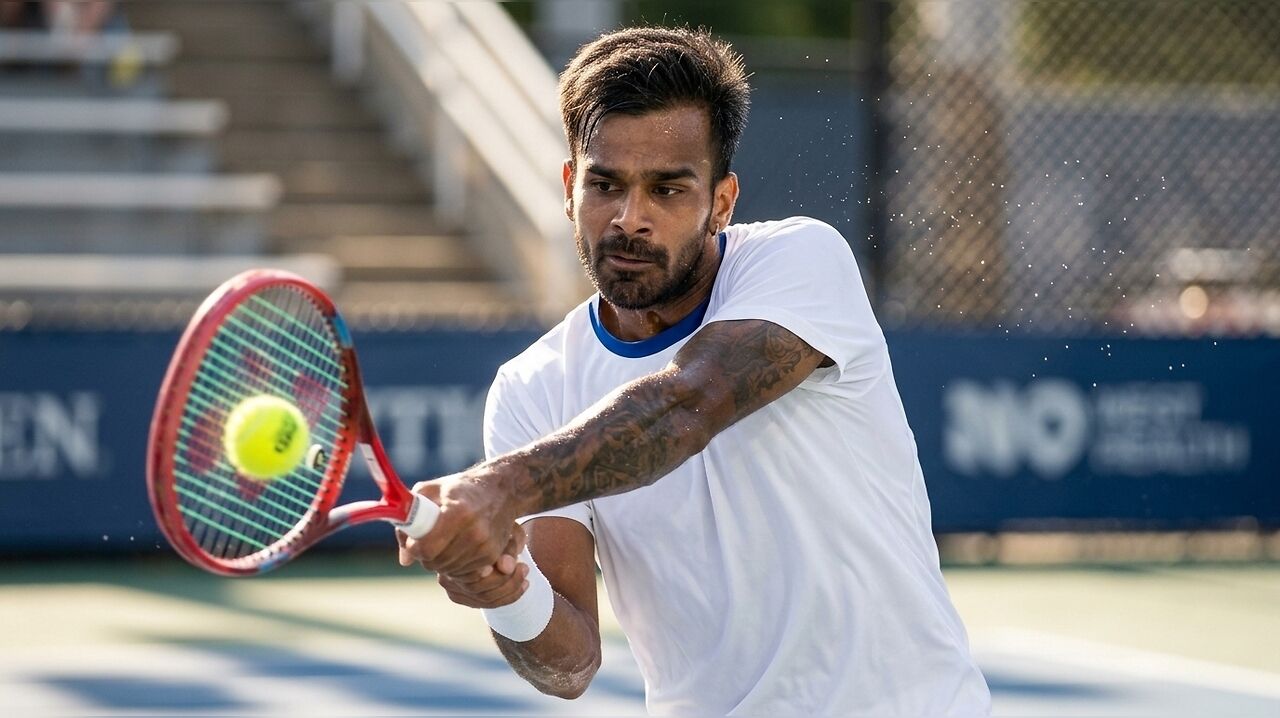
India’s aspirations of securing a historic spot in the
The decisive blow came in the reverse singles rubber, where
Doubles victory provides brief hope
The tie had briefly swung in India’s favour earlier in the day when the doubles pairing of Dhakshineswar Suresh and N. Sriram Balaji kept the visitors' hopes alive. In a tactical shift, the Indian camp replaced Niki Poonacha with Dhakshineswar, a gamble that paid dividends as the duo secured a hard-fought 6-3, 3-6, 6-3 win to narrow the series deficit to 1-2.
The Indian pair displayed aggressive intent from the start, consistently pressuring the serve of their Korean opponents. After a dominant opening set, the match tightened significantly in the second, with Korea capitalising on a crucial service break to force a decider. The final set remained a tense affair until the eighth game, when India successfully broke serve to love. Dhakshineswar proved instrumental in the closing stages, delivering two decisive winners to seal the match and briefly shift the momentum of the tie.
Uncertain future for Indian leadership
Despite the spirited effort in the doubles, the momentum could not be sustained into the final singles match. Nagal, who had previously pushed Hyeon Chung to a three-hour contest, appeared listless against Kwon, failing to mount the comeback required to force a deciding fifth rubber. The defeat leaves the Indian team reflecting on a missed opportunity to break new ground on the international stage.
Beyond the immediate disappointment of the loss, questions now loom over the future of the Indian team’s leadership. Captain Rohit Rajpal’s current contract is set to expire in December 2026, and with no official announcement regarding an extension, his tenure remains in a state of uncertainty. As the team prepares for the 2027 cycle, the focus will shift toward rebuilding and addressing the inconsistencies that ultimately cost them a place in the elite bracket of the competition.