

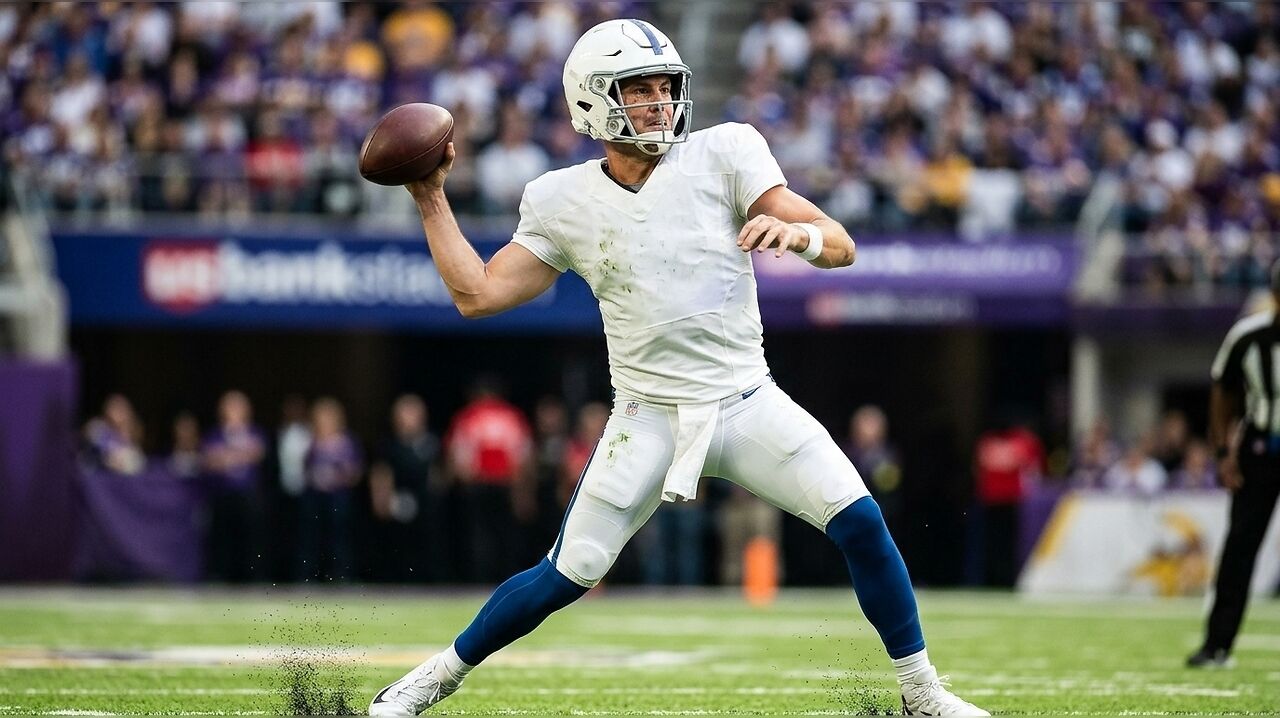
The 2026 NFL season has highlighted a recurring crisis in professional football: the scarcity of reliable quarterback play. As the league reaches Week 11, the landscape is defined by an unprecedented wave of injuries, forcing teams to rely on depth charts that were never intended to see the field. Fourteen teams have already been forced to bench their primary starter for at least a quarter of action, while the Bears, Cardinals, and Ravens have been pushed as far as their third-string options. This trend has sparked a familiar debate among analysts and fans alike: is the NFL actually home to 32 starting-caliber quarterbacks, or is the league simply forced to settle for whoever is available?
The conventional wisdom suggests that there are rarely 32 quality starters in the league at any given time. However, this argument often suffers from a fundamental flaw: it evaluates only the 32 players currently occupying starting roles, ignoring the context of team infrastructure, coaching, and the reality that many capable passers are relegated to backup duties. When looking at the league through a wider lens, it becomes clear that the issue may not be a lack of talent, but rather a failure of identification and situational fit.
The Myth of the 32-Starter Ceiling
History has shown that identifying the right quarterback is a notoriously difficult task for NFL front offices. Teams frequently commit to high-priced veterans or young, high-draft-pick prospects despite clear evidence that a more effective option is waiting on the bench. For instance, the 2024 season saw the Browns struggle with Deshaun Watson before finding more offensive success with Jameis Winston, while the Colts persisted with Anthony Richardson despite the availability of the more experienced Joe Flacco. These instances suggest that the 32 players starting on any given Sunday are not necessarily the 32 best quarterbacks in the league.
Furthermore, the success of players like Sam Darnold, who transformed from a struggling starter into a Super Bowl winner after moving to the Vikings and Seahawks, underscores the importance of environment. Players who look hopeless in one scheme can often find success when paired with better playmakers, superior line play, and a more favorable offensive system. This suggests that the pool of "viable" starters is likely larger than the 32 active QB1s, provided those players are placed in situations that play to their specific strengths.
Evaluating the True Depth of Talent
To determine if there are truly 32 viable starters, one must look beyond the current depth chart. By analyzing players who have posted an adjusted net yards per attempt index (ANY/A+) of 100 or better over a 200-attempt sample within a three-year window, a clearer picture emerges. This metric, which accounts for yardage, touchdowns, interceptions, and sacks, suggests that the number of viable quarterbacks in the league typically fluctuates between 36 and 44.
The careers of players like Kurt Warner, Tom Brady, Dak Prescott, and Brock Purdy serve as evidence that talent often goes unrecognized until a starter suffers an injury. These players were not initially viewed as franchise cornerstones, yet they thrived when given an extended opportunity. If the league were to prioritize infrastructure and situational fit over the blind pursuit of perceived "star" quarterbacks, it is highly probable that more players would emerge as functional, if not elite, starters. Ultimately, the data suggests that while the NFL may not have 32 superstars, it possesses a deeper reservoir of competent signal-callers than the current starting lineups would lead us to believe.
