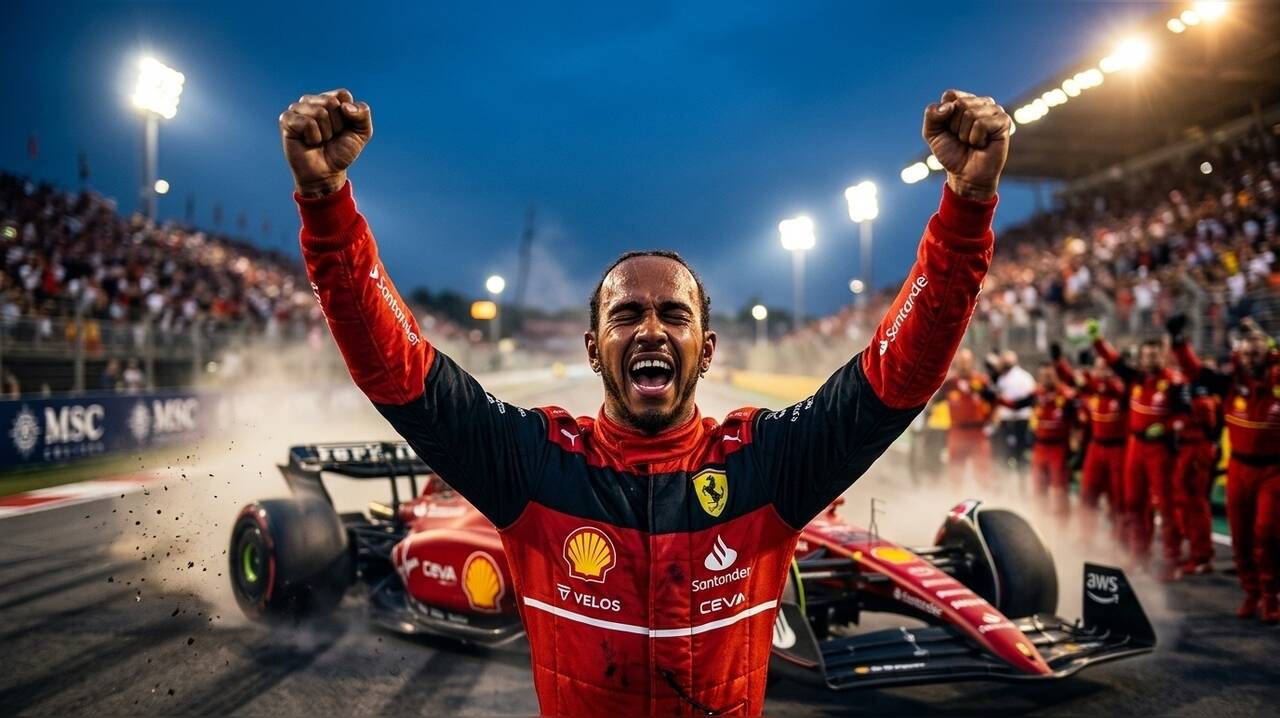
In the world of Formula One, every race is touted as equally significant, with 25 points up for grabs regardless of the venue. However, certain weekends transcend mere numbers, reshaping narratives and compelling teams to reassess their strategies. The 2026 Barcelona-Catalunya Grand Prix emerged as one such pivotal event, marking a potential turning point in the championship landscape.
Barcelona's Unique Challenge
The Circuit de Barcelona-Catalunya is renowned for its comprehensive test of a racing car's capabilities. Drivers often cite its long corners, technical sections, and tire management demands as key indicators of a team's true performance. Unlike street circuits, where results can be skewed by unpredictable factors, Barcelona typically reveals the genuine competitive order, making it a prime target for teams to introduce significant upgrades.
Ferrari arrived in Barcelona eager to close the gap to Mercedes, with Hamilton coming off two second-place finishes. Despite missing the first practice session, he surprised many by qualifying just 0.064 seconds behind teammate George Russell, marking his best grid position since joining Ferrari. Russell, needing a strong performance after falling behind in points, secured pole position with a stellar final lap, setting the stage for a dramatic race.
A Race of Strategy and Resilience
Hamilton's victory was not merely a stroke of luck; it was a testament to Ferrari's strategic acumen and genuine pace. The team executed an early pit stop to undercut Russell, allowing Hamilton to build a significant lead. A timely Virtual Safety Car, prompted by Fernando Alonso's retirement, further aided Hamilton, enabling him to pit without losing ground. He ultimately won by nearly 20 seconds, showcasing a blend of speed, tire management, and fortunate timing.
This race also exposed vulnerabilities within Mercedes, as Antonelli's late retirement due to a power unit issue cut his points lead over Hamilton to 41. The incident marked the second mechanical failure for Mercedes in three races, raising concerns about their reliability. Team principal Toto Wolff acknowledged the need for improvement, emphasizing that such issues could alter the course of the championship.
Hamilton's win at 41 years old, making him the oldest Grand Prix winner since 1970, underscored his enduring talent and ability to influence the championship. His emotional post-race remarks reflected the significance of this victory, not just for him but for Ferrari, which transformed from a hopeful contender into a serious threat. The implications of the Barcelona race extend beyond individual results; they signal a potential shift in the competitive landscape of Formula One.
As the season progresses, teams will analyze data from Barcelona to refine their strategies. The upcoming races, starting with Austria, will test their adaptability and resilience. With the championship battle reignited, the 2026 season promises to be a thrilling contest, and Barcelona may well be remembered as the catalyst for change.