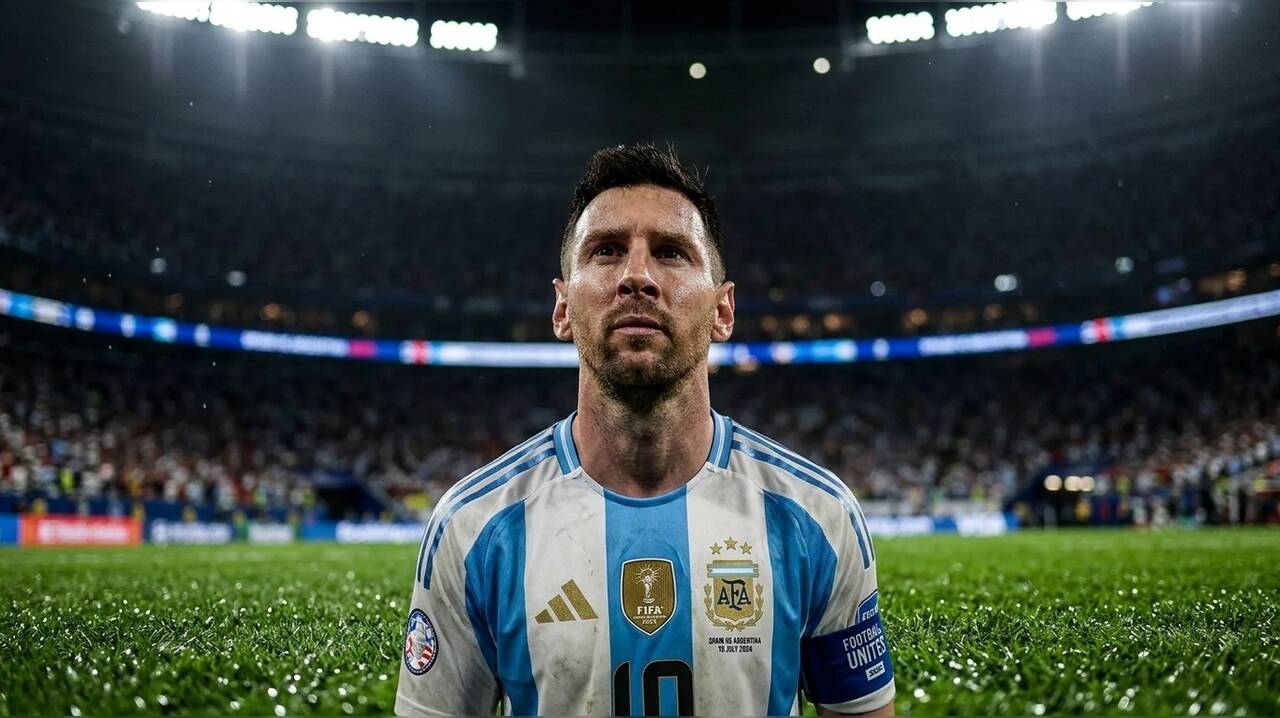
The conclusion of his international tenure marks the end of a transformative era for Argentine football. Over the course of 207 matches, Messi netted 125 goals and solidified his status as one of the sport's most influential figures, overcoming early career heartbreak to eventually secure major international silverware.
From Early Struggles to Global Dominance
Messi’s international journey began in 2005 as an 18-year-old, though his debut against Hungary in Budapest was cut short by a red card just 90 seconds after he entered the pitch as a substitute. He soon found his rhythm, scoring his first World Cup goal during a 6-0 victory over Serbia and Montenegro in 2006. Despite early promise, the following years were marked by frustration, including quarter-final exits in 2006 and 2010, and a painful loss to Germany in the 2014 World Cup final.
The disappointment deepened in 2016 following consecutive
A Legacy Defined by Major Titles
The latter half of Messi’s career saw him finally capture the international trophies that had long eluded him. In 2021, he led Argentina to a 1-0 victory over Brazil in the Copa America final, ending a 28-year wait for a major title. He followed this with a historic performance at the 2022 World Cup in Qatar, where he scored seven goals and provided three assists across seven matches, ultimately lifting the trophy after a dramatic penalty shootout win against France.
Messi’s final years saw him continue to break records, including becoming the player with the most World Cup appearances in history, totaling 34 matches and 21 goals in the tournament. After winning the 2024 Copa America, he entered his sixth World Cup in 2026 at age 38, scoring eight goals in his first five games. Despite his efforts, the final defeat to Spain served as the closing chapter for a player who appeared in three different World Cup finals and redefined the standards of international football.