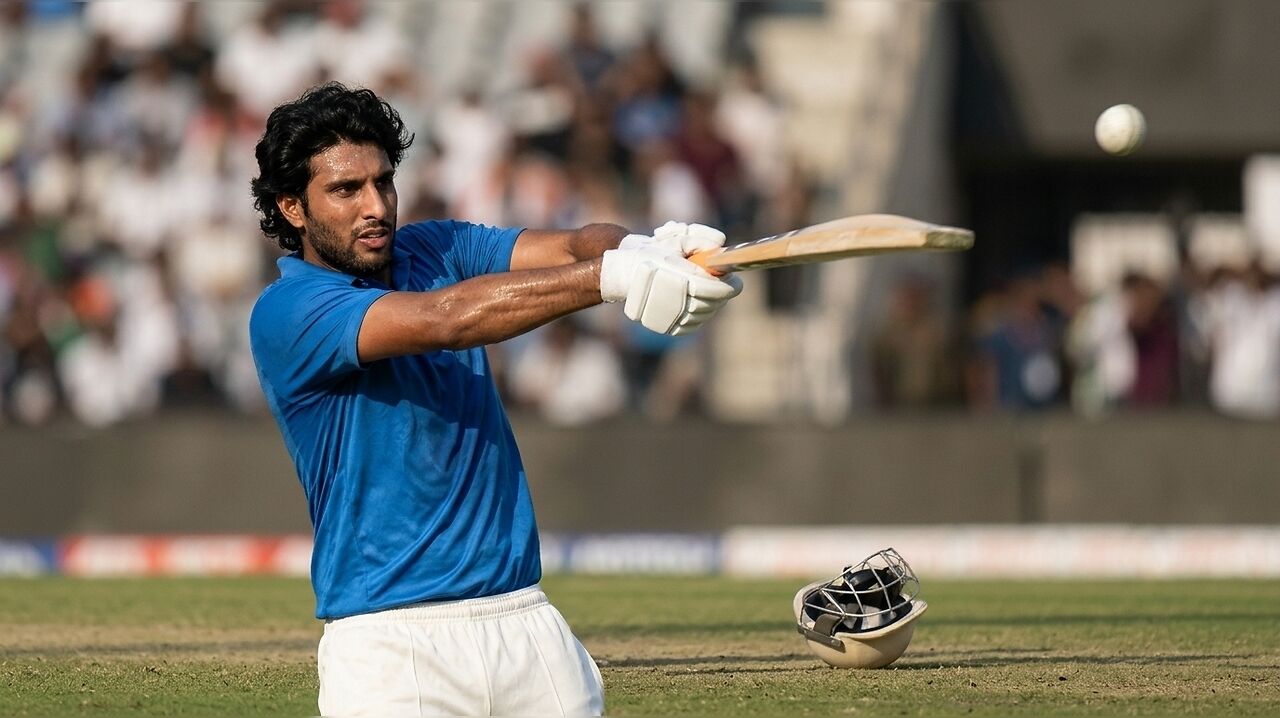
The young left-hander’s knock was defined by an incredible display of power-hitting, featuring 28 sixes. He reached his century in just 28 balls, setting a new record for the fastest List A hundred, before accelerating to complete his double century off only 52 balls. This performance helped India A comfortably chase down the UAE’s target of 250 in a mere 14.2 overs.
A Historic Display of Power-Hitting
Sooryavanshi’s innings saw him surpass several professional cricket records, including the fastest List A century previously held by Jake Fraser-McGurk and the record for the fastest double century. His 28 sixes marked the highest number of maximums hit in a single innings in professional cricket history. Reflecting on the feat, Varma noted that while the team knew of the youngster's potential, the sheer scale of the performance was unexpected.
The captain revealed that the team encourages Sooryavanshi to play his natural, aggressive game without the pressure of rotating the strike. Varma humorously noted that the team stopped celebrating boundaries and instead focused on the frequency of sixes, acknowledging that 180 of the teenager's runs came from clearing the ropes.
Addressing Recent Criticism
Following the emphatic win, Varma also took the opportunity to clarify comments made after India A’s previous 48-run defeat to Pakistan A. During that match, Varma scored 100 off 149 balls but faced criticism for his approach during the 314-run chase. He explained that the loss of early wickets and the challenging nature of the pitch necessitated a more cautious approach to keep the team in the game.
Varma emphasized that his post-match remarks were intended to explain the team's tactical approach rather than criticize his teammates. He highlighted the importance of the 112-run seventh-wicket partnership with Shahbaz Ahmed, whose 56-run contribution was vital in that contest. Varma reiterated his support for his squad, stating that he remains a player-focused captain and that the team remains united despite external criticism, viewing the tournament as a collective effort where every member is considered a match-winner.