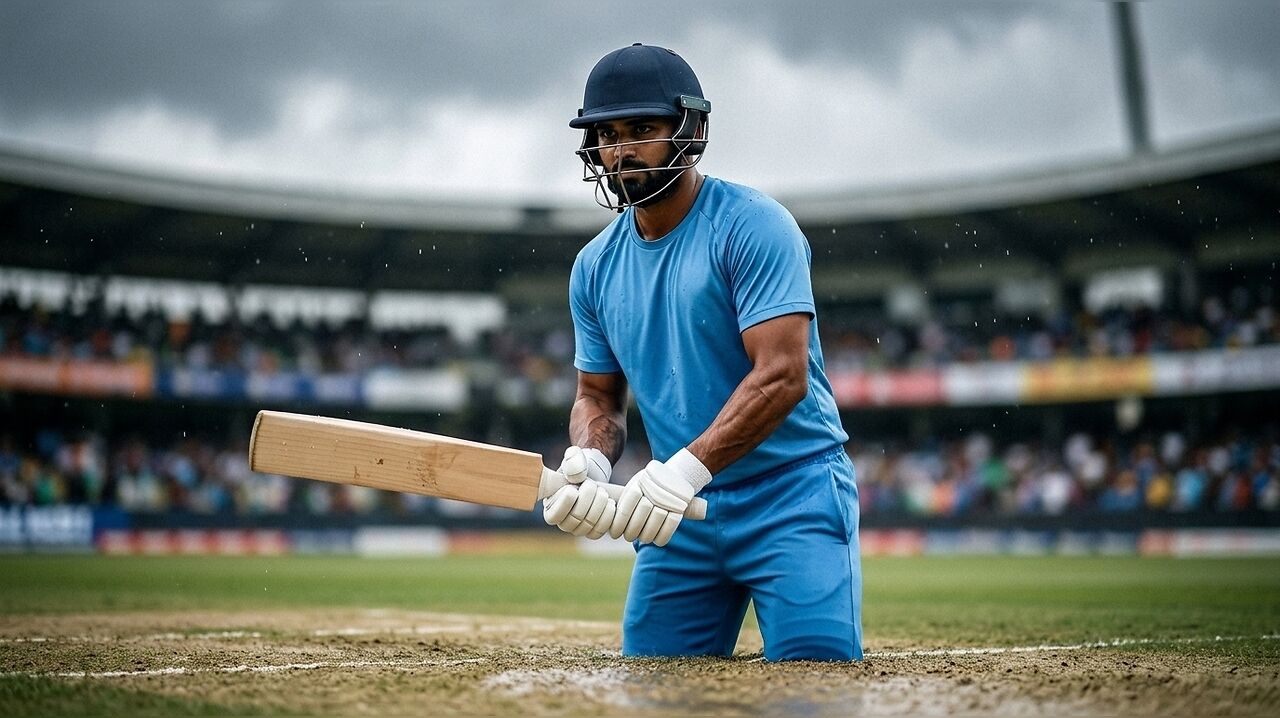
The ongoing ODI series against New Zealand has served as more than just a bilateral contest; it has acted as a critical testing ground for India’s long-term planning ahead of the 2027 World Cup. With the tournament set to be hosted by South Africa, Zimbabwe, and Namibia, the conditions encountered in Auckland and Wellington—characterized by significant seam movement and variable bounce—are being viewed as a vital dress rehearsal for the challenges that lie ahead in southern Africa.
However, these matches have highlighted a recurring tactical dilemma for the Indian team management. While the squad possesses a wealth of talent, the persistent shuffling of the batting order has raised questions about role clarity, particularly concerning
The Case for Stability in the Middle Order
The recent outings in New Zealand have underscored the necessity of having a technically sound batter at No. 5. In both Auckland and Wellington, the Indian middle order faced significant pressure as the ball moved off the pitch. While the team experimented with promoting Axar Patel to the No. 5 spot to maintain a left-right batting combination, the results were underwhelming. Patel, who has struggled to adapt to these seaming conditions, has found it difficult to replicate the impact he provides on slower, spin-friendly surfaces.
In contrast, Rahul’s ability to absorb pressure and organize his technique has proven invaluable. His unbeaten 26 in the challenging conditions of Wellington highlighted his capacity to stabilize an innings when the top order falters. Statistical data further supports the argument for his permanent placement: Rahul averages 68.58 at No. 5 in ODIs with a strike rate above 103, whereas Patel’s average in the same position drops significantly, particularly in overseas conditions where it falls below 20.
Prioritizing Technique Over Tactical Theory
The Indian team management has historically favored a flexible approach, often using floaters to exploit ground dimensions or disrupt bowling rhythms. While this strategy was effective in previous cycles, the upcoming World Cup requirements demand a shift in focus. The conditions in South Africa and neighboring nations will likely place the middle order under intense scrutiny, where technical proficiency will be far more important than tactical maneuvering.
By continuing to use Rahul as a stop-gap solution, the team risks underutilizing one of its most reliable batters. If the long-term blueprint involves a stable middle order, there is a strong argument for granting Rahul ownership of the No. 5 position now, rather than waiting until the tournament approaches. While Axar Patel remains a valuable asset for his finishing capabilities and spin bowling, his optimal role appears to be lower in the order, where he can provide balance without the burden of rebuilding an innings. For India to succeed in the next World Cup cycle, the team may need to stop asking Rahul to adapt to their needs and instead build the structure around his proven strengths.