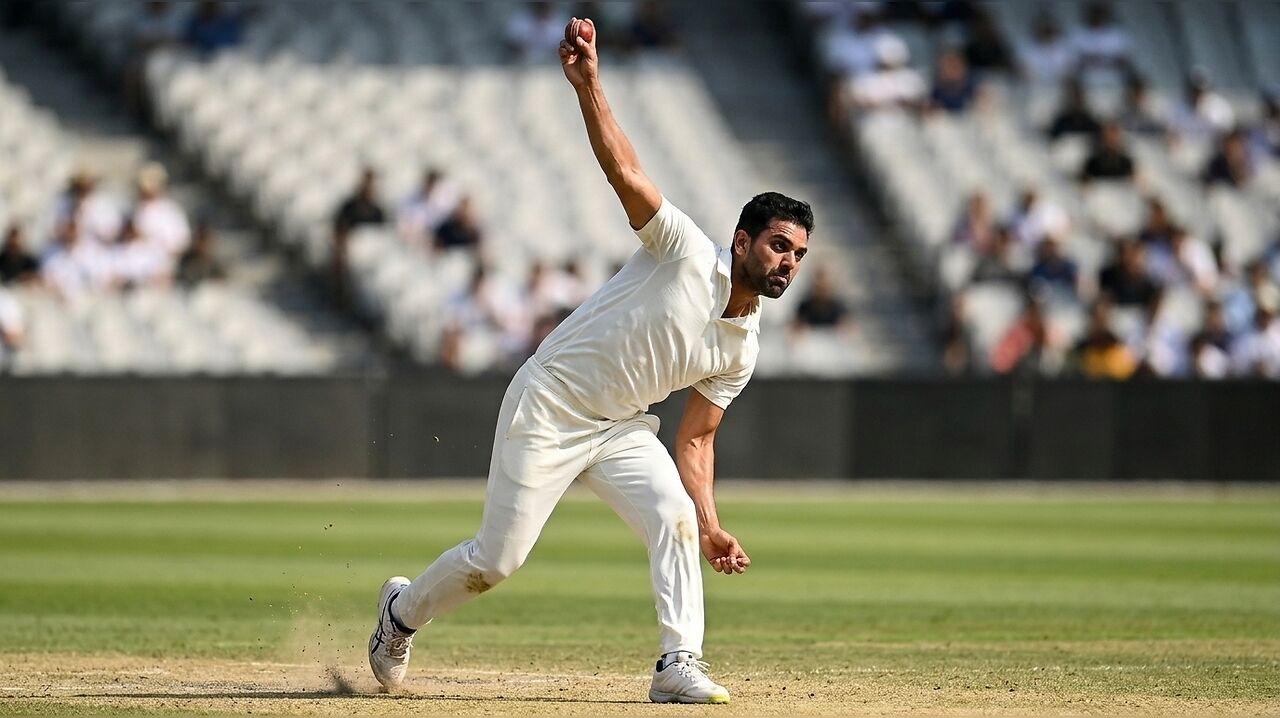
Veteran pacer
The call to action followed Chahar’s match-winning performance for Rajasthan against Bengal at the Wankhede Stadium, where he claimed three wickets for 13 runs to secure a crucial victory and a spot in the Super League stage of the
Concerns Over Ball Specifications and Performance
Chahar’s concerns stem from his own investigation into the equipment provided for matches. After noticing a lack of movement, he weighed 15 new Kookaburra balls and discovered that none met the standard 153-gram requirement, with some weighing as much as 171 grams. According to the pacer, while umpires and match referees verify the shape and size of the ball, the weight—which should fall between 153 and 161 grams—is frequently overlooked.
The Rajasthan captain noted that he raised the issue during a pre-tournament meeting with
Historical Influence and Future Advocacy
This is not the first time Chahar has successfully lobbied for changes to match equipment. He recalled a previous effort to increase the number of balls available for selection in the IPL from six to 12. After struggling to find suitable, lighter balls among the smaller pool, he sought the assistance of former Chennai Super Kings captain MS Dhoni. Following Dhoni’s intervention, the request was promptly accepted by the BCCI, leading to the current practice of providing 12 balls for selection.
Looking ahead, Chahar intends to bring the weight issue to the forefront before the next IPL season. He maintains that his request is not a demand for special treatment, but rather a call for the game to adhere to established norms. By ensuring all 12 balls provided for a match fall within the permitted weight range, he believes the sport can restore a fairer balance between the bat and the ball, particularly on the flat pitches often encountered in T20 cricket.