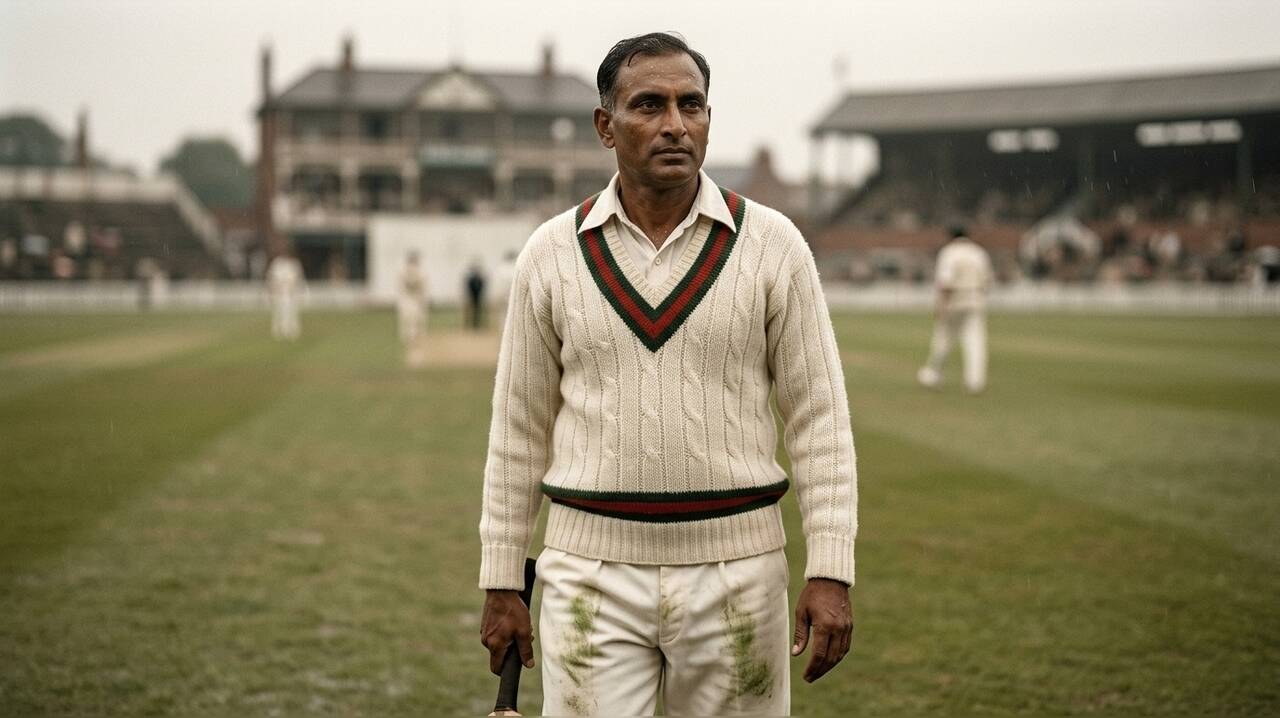
In the long history of Test cricket, only 13 players have reached the pinnacle of the sport after turning 40. Among this exclusive group are two Indians: Rustomji Jamshedji and
Born in Madras on June 16, 1896, Ramaswami was a product of a prominent cricketing family. His father, Buchi Babu Naidu, was a pioneer of the sport in the region, and the tradition continued through his brothers and eventually his own son. A left-handed batter known for his free-stroking style and powerful drives, Ramaswami enjoyed a First-Class career that spanned 27 years, during which he accumulated 2,400 runs at an average of 28.91 and claimed 30 wickets.
A Multi-Sport Talent and Late International Bloom
Ramaswami’s sporting prowess extended well beyond the cricket pitch. During his time at Cambridge University, which lasted until 1923, he excelled in tennis. His skill on the court led to his selection for the Davis Cup team and an appearance at Wimbledon. In a notable five-set victory during the first round of the tournament, he defeated Britain’s Ulysses Williams before eventually bowing out to Nicolae Misu.
Despite his success in tennis, cricket remained his primary pursuit. In 1936, at the age of 40, he was selected for India’s tour of England. Although he modestly suggested in his book, 'Ramblings of a games addict', that his selection might have been due to factors other than his form, his performance proved otherwise. He tallied 737 runs during the tour before making his Test debut at Old Trafford. In that match, he scored 40 and 60, contributing to a draw in a game famously remembered for the 203-run opening partnership between Vijay Merchant and Mushtaq Ali. He concluded his brief two-Test international career with 170 runs at an impressive average of 56.66.
Post-Playing Career and Unexplained Disappearance
Following his retirement from international cricket, Ramaswami remained deeply involved in the sport. He served as the manager for India’s 1953 tour of the West Indies and later transitioned into the role of a national selector during the late 1950s. This period was a tumultuous one for Indian cricket, characterized by inconsistent results and internal disagreements regarding team leadership and selection policies.
The final chapter of Ramaswami’s life remains a subject of intrigue. On October 15, 1985, he departed his home in Adyar, Chennai, and never returned. Despite various unconfirmed sightings over the years, his fate was never determined. While some records have cited January 1990 as his date of death, Wisden officially lists his status as 'death unknown.' His family later suggested that he had expressed a desire not to be a burden on them, leaving behind a legacy that is as much defined by his mysterious exit as it is by his remarkable achievements on the cricket field and the tennis court.