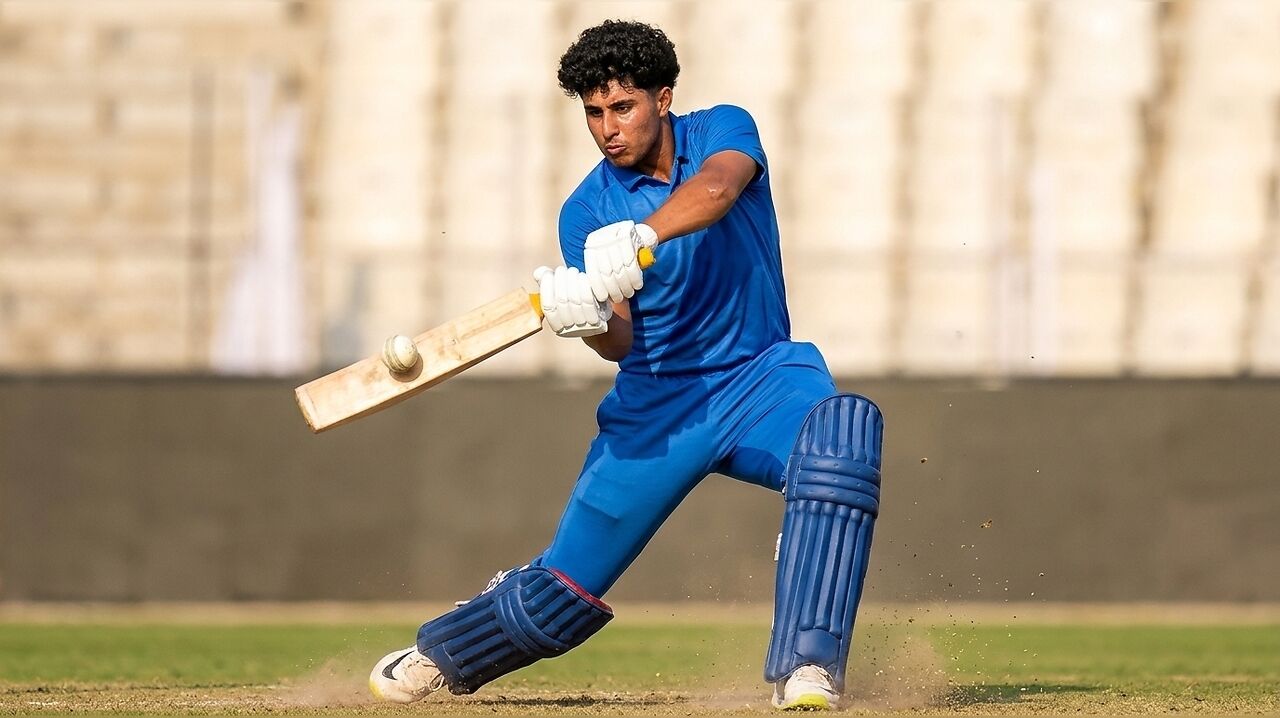
By reaching this milestone, Sehwag has etched his name alongside two prominent Indian cricketers, Shubman Gill and Mayank Agarwal, who also recorded scores of 160 at the Under-19 level. Gill achieved his mark against England in Mumbai in 2017, while Agarwal reached the same total against Australia in Hobart back in 2009. This performance marks a significant highlight in the tournament for the young batter.
A pivotal partnership and a near-record chase
The foundation for India's substantial total was built on a massive 193-run partnership for the second wicket between Sehwag and VK Vineeth. After the UAE won the toss and elected to field, the duo successfully navigated the early phases of the match before accelerating to put the opposition under immense pressure. Sehwag’s innings, which began with a cautious approach as India reached 42 for no loss in the opening 10 overs, eventually blossomed into a boundary-filled assault that showcased both his power and his ability to rotate the strike effectively.
Sehwag’s pursuit of an even higher total was eventually halted in the 45th over when he was caught by Uddish Suri at mid-wicket off the bowling of Naseem Khan. While he fell short of the long-standing Indian Youth ODI record of 177, held by Ambati Rayudu since 2002, his contribution remains one of the most notable in recent years. Other high scores in this category include Vaibhav Sooryavanshi’s 175 against England in 2026 and 171 against the UAE in 2025, as well as Raj Bawa’s unbeaten 162 against Uganda in 2022.
This performance comes as a vital response for the Indian side, which entered the match looking to recover from a three-wicket loss to Pakistan in their previous group fixture. Despite a century from Arjun Rajput in that earlier encounter, India had been restricted to 208, a total that Pakistan successfully chased down. With this latest victory-oriented display, India has significantly bolstered its standing in the tournament.